Anne Locker, Library and Archives Manager
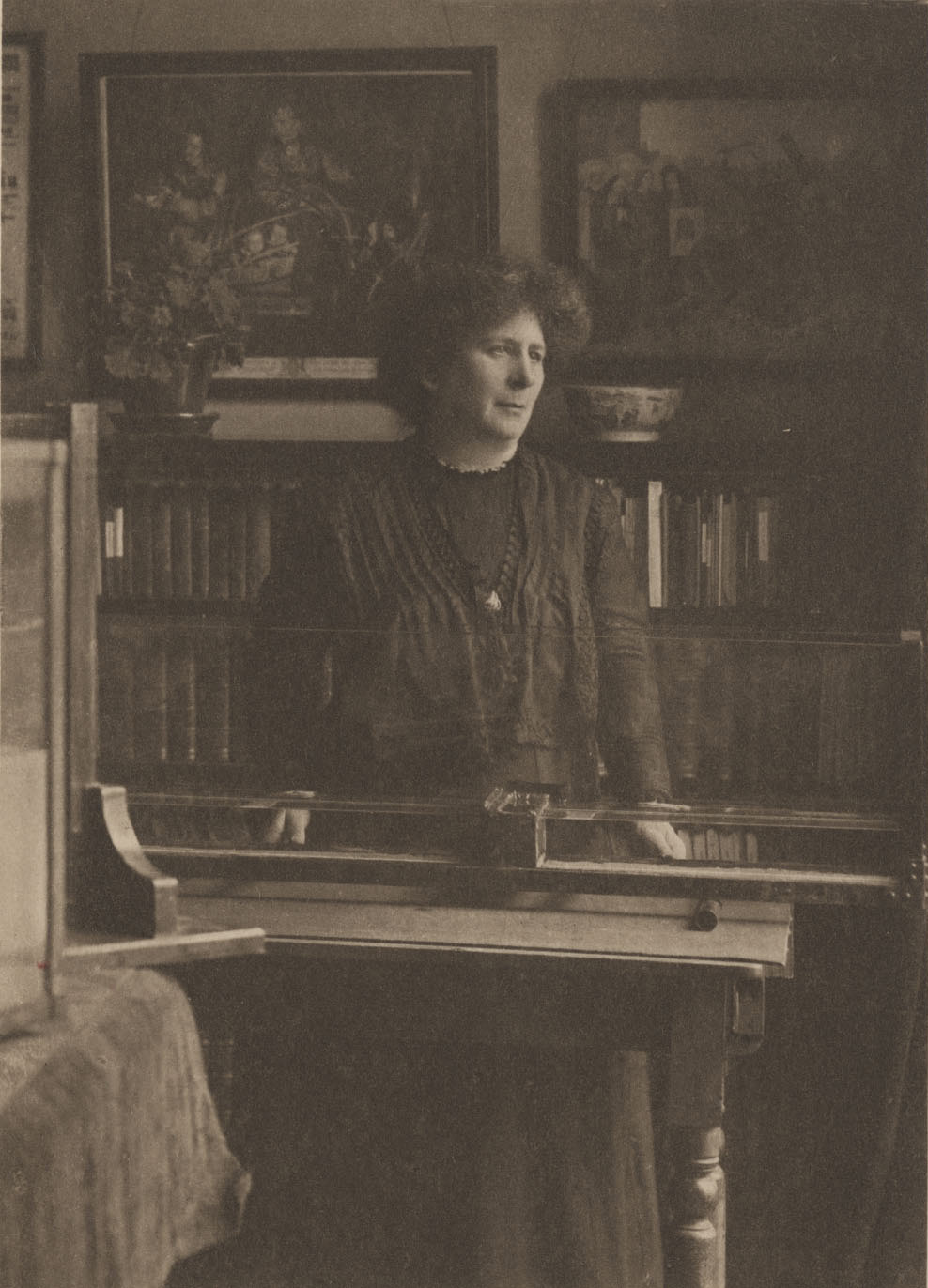
In 2026, we celebrate the 120th anniversary of the Royal Society awarding Hertha Ayrton the Hughes medal for her contributions to science. Seven years earlier, she became a Member of the Institution of Electrical Engineers, now the IET, the first woman to do so.
Hertha’s legacy extends beyond her important contributions to science and engineering. She was a prominent campaigner for women’s suffrage, a supportive friend to Marie Curie and one of the founder members of Girton College’s first fire brigade!
Discover more about Hertha and her impact on the 20th century, and join us to celebrate her life and legacy in 2026. To find out how to get involved, have a look at the links at the end of this blog.
Who was Hertha Ayrton?
“more can be learned from a careful observation of small phenomena, by observation and reflection in fact, than by passing any number of examinations…”
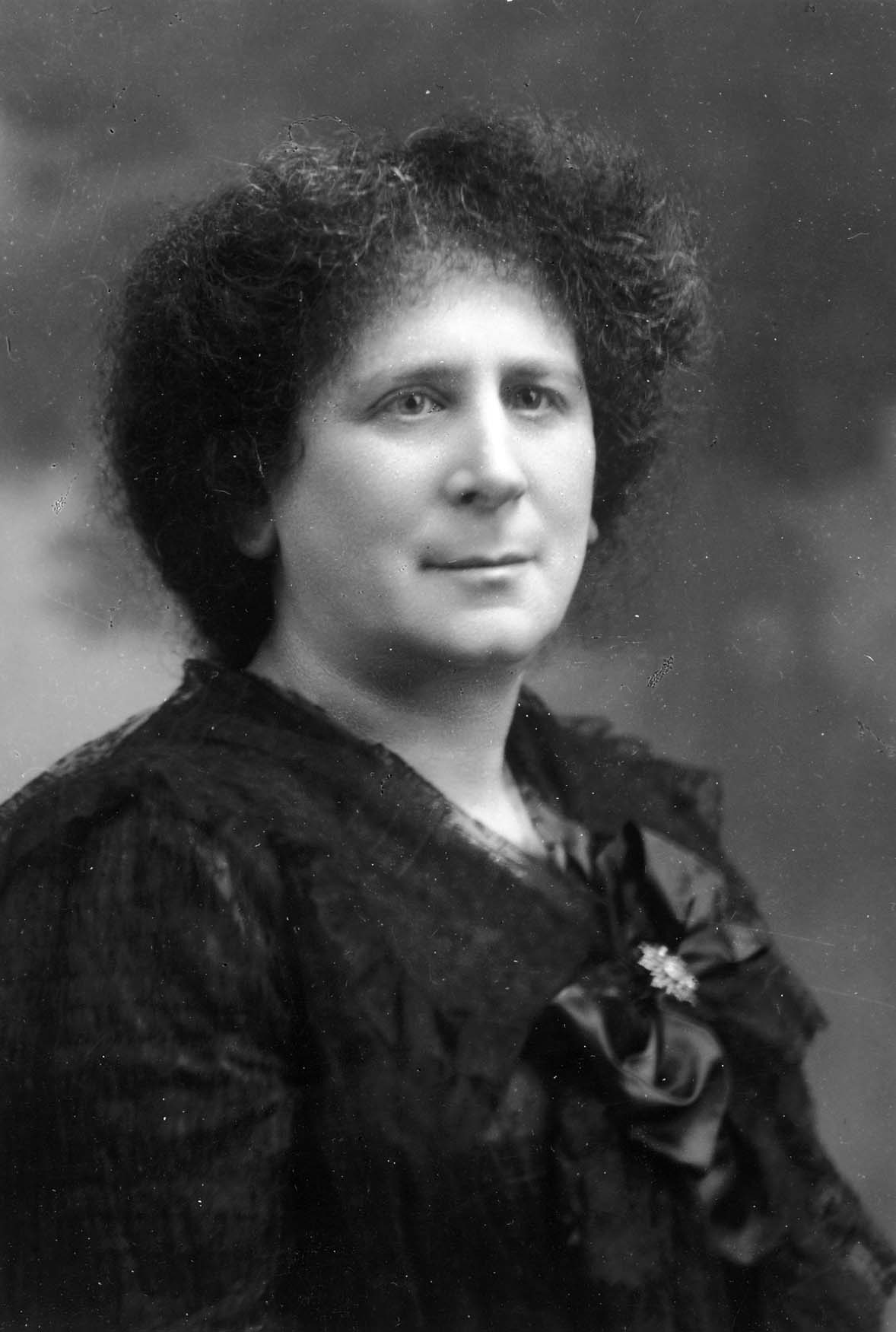
Hertha Ayrton was a mathematician and physicist whose work applied physical principles to practical engineering problems. Born Phoebe Sarah Marks (changing her name as a teenager), she received an usually excellent education at a London school run by an aunt, Marion Hartog. Hertha’s widowed mother thought it was very important that her daughter be well-educated, because ‘women have the harder battle to fight in the world.’
Thanks to Barbara Bodichon, the co-founder of Girton College and a family friend, Hertha was able to attend Girton and study mathematics. After graduating, she returned to London to teach and met her husband William Ayrton while attending classes at Finsbury Technical College. William encouraged Hertha to continue her work after their marriage and the birth of their daughter, but it was a legacy from Barbara Bodichon which enabled her to employ a housekeeper and free up time for research.
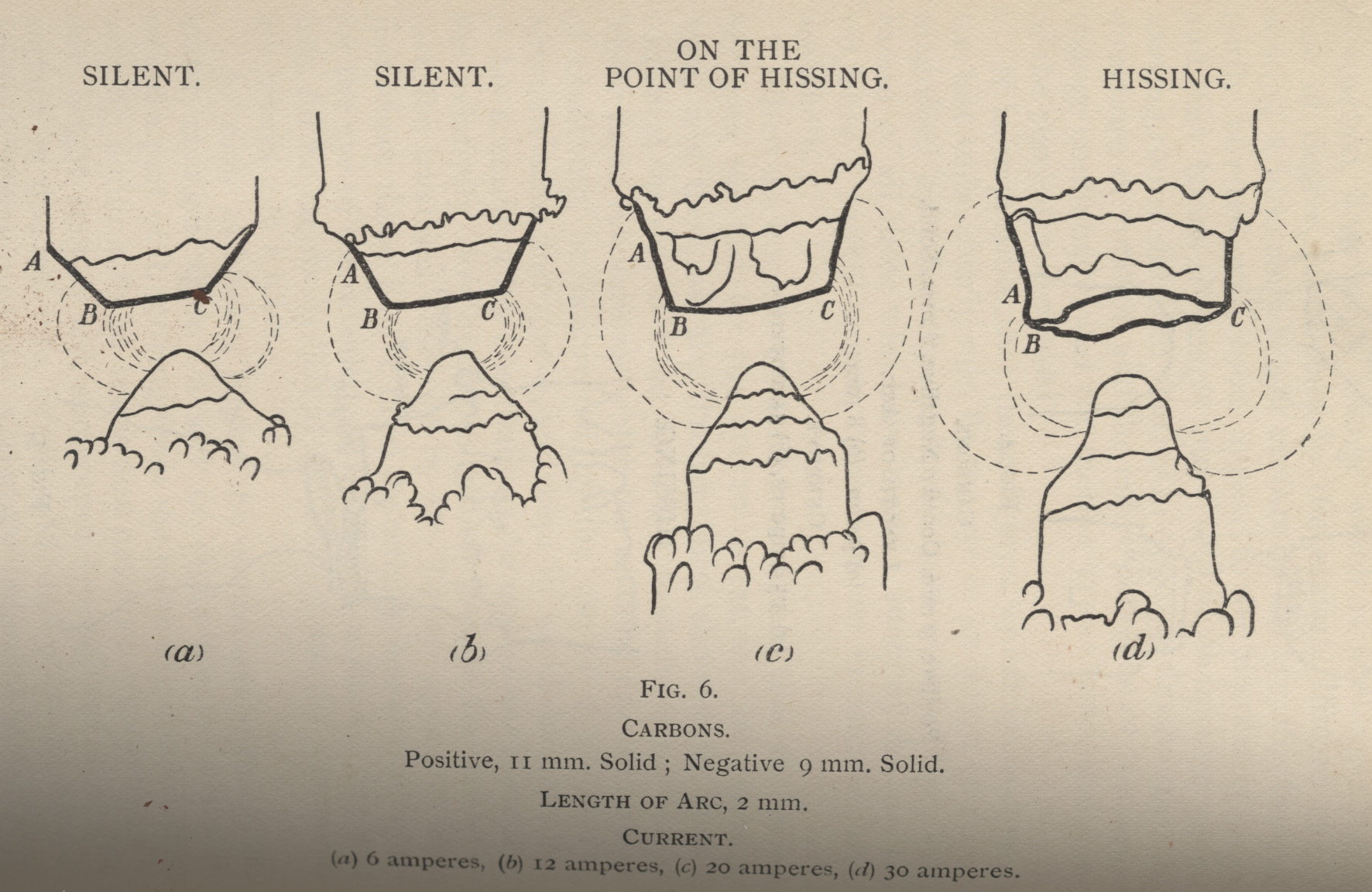
Arc lamps were the first practical electric lamps, and would have been seen and used widely in 1899, mainly for external and street lighting. The light came from a bright white spark generated by an electric current travelling between two carbon rods. Sometimes these lamps made humming and hissing noises, and it was the hissing on which Ayrton focused her research. This hissing meant that the arc was becoming unstable and less efficient. Ayrton set out to study the phenomenon in painstaking detail, concluding that it was as the result of changes in the shape of the carbon ends. She stated that a) the hissing arc was caused by a crater shape forming on one side of the carbon (this is illustrated by a series of diagrams in the Journal), and b) that the drop in current thus produced is due to the effect of oxygen reaching this crater and combining with the carbon on the surface.
Ayrton presented her findings to the IEE in 1899. The President, the electric lighting pioneer Sir Joseph Swan, stated that ‘I am sure that we on our part feel more than honoured that Mrs. Ayrton has chosen this Institution as the medium of [her paper’s] publication.’ A lively debate on the findings of Ayrton’s research followed, and Swan stated:
“It is the first paper we have had the pleasure of receiving from Mrs Ayrton; I sincerely hope it will not be the last. We do not have the honour of numbering among us any lady members, but I do not know any legal disability against ladies becoming members. If not, I hope we may look forward to the pleasure of numbering Mrs Ayrton among the members of the Institution before long.”
Hertha Ayrton was elected as the first woman Member of the IEE later that year.
Further research and the campaign for women’s suffrage
Hertha went on to research ripple movements, and presented a paper on the subject to the Royal Society in 1904. She was awarded the Hughes Medal in 1906 (although she was turned down for Fellowship because she was a married woman).
A fervent campaigner against injustice, Hertha was a close friend of the scientist Marie Curie, hosting her on a visit to the UK and writing a letter in her defence when Curie was accused of taking the credit for her husband’s research. Curie presented two of her publications to her friend, and these are now part of the IET rare books collection Marie Curie – New Material Uncovered in IET Archives – IET Archives blog.
Hertha was also involved in the campaign for women’s votes. She attended the Downing Street March in 1910 and narrowly avoided arrest. During the suffragist hunger strikers, she cared for women released under the ‘Cat and Mouse Act’, including Emmeline Pankhurst, at her home in Norfolk Square.
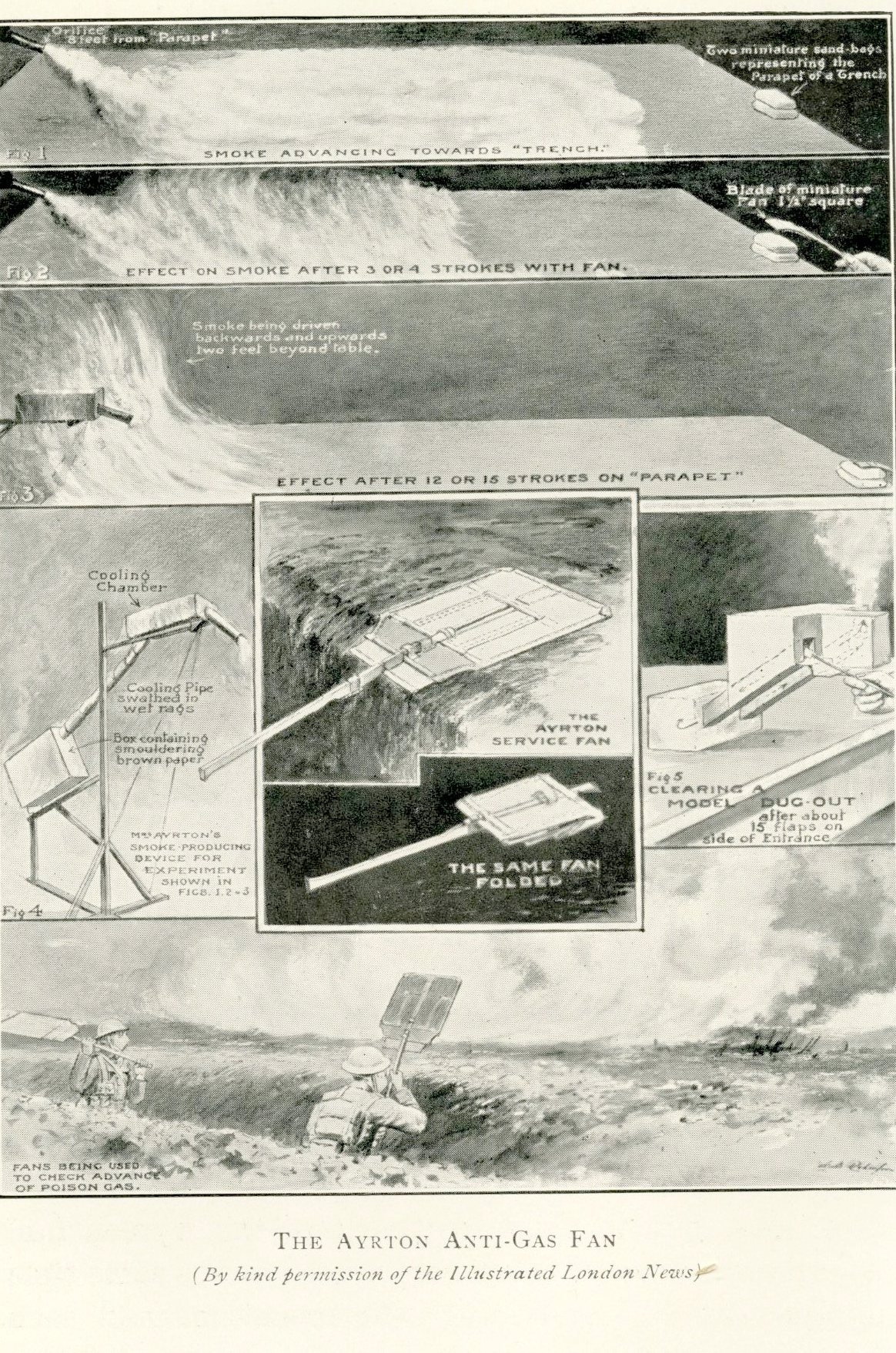
During the First World War, Hertha used her knowledge of air vortices from her sand ripple research to invent a fan for expelling gas from the trenches. The ‘Ayrton Flapper Fan’ was judged to be effective but was not used widely during the War.
Hertha continued her scientific research until her death in 1923.
2026 events and activities
Join a group of Hertha Ayrton enthusiasts and academics, the ‘Ayrton Fan Club,’ and get together to shine a light on every celebration of her life and legacy throughout 2026. More details on planned events and activities can be found on the ‘Making Marks’ website.
Links and further resources
Making Marks: The Ripple Of A STEM Pioneer – The Cambridge First All-Ladies Fire Brigade
IET Member News article Celebrating Hertha Ayrton
YouTube video produced by the IET Hertha Ayrton: Engineer, Inventor, and Suffragette.
BBC YouTube video The woman who tamed lightning | Hertha Marks Ayrton | BBC Ideas
Science Museum Group article The life and material culture of Hertha Marks Ayrton (1854-1923): suffragette, physicist, mathematician and inventor – Science Museum Group Journal
 IET Archives blog
Leave a comment