Graeme Gooday (University of Leeds) and Patricia Fara (University of Cambridge)
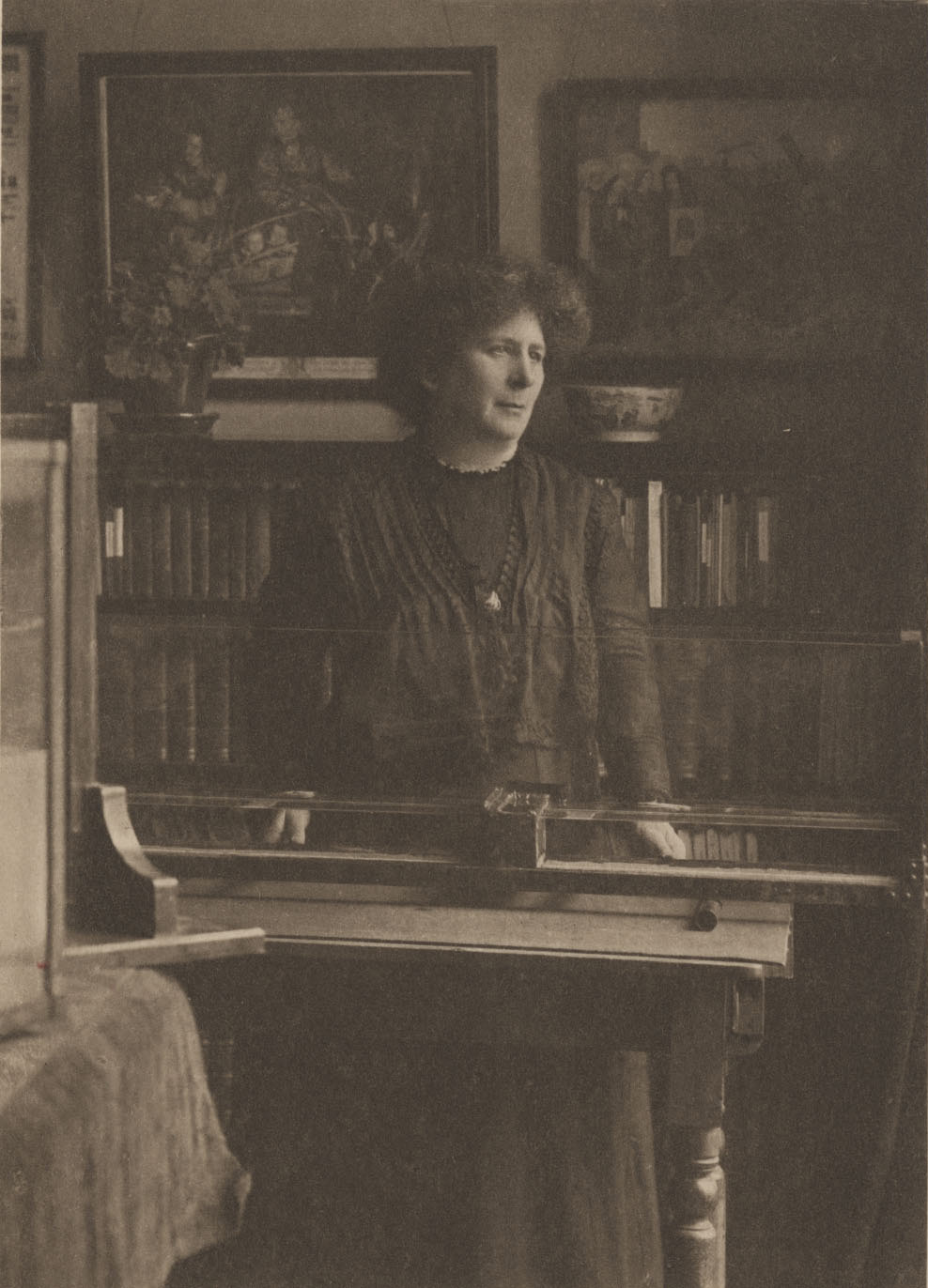
Today is the 172nd anniversary of an extraordinary woman: Hertha Ayrton (1854–1923), who was born as Sarah Phoebe Marks on 28 April 1854. She was the first woman to become a Fellow of the Institution of Electrical Engineers (IEE), the first woman to deliver her own paper at the Royal Society (although she was rejected for Fellowship on the grounds that she was married) and the first woman to be awarded the Royal Society’s prestigious Hughes Medal – and what’s more, the only woman to receive that medal in the entire 20th century.
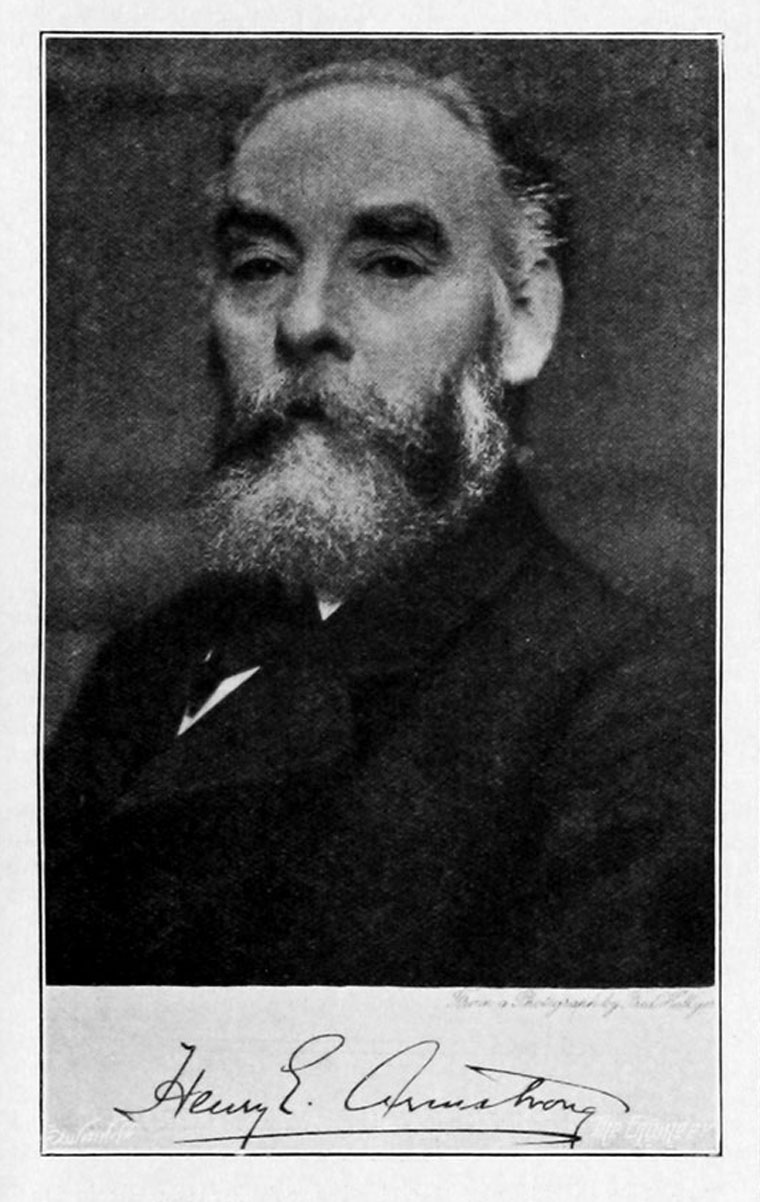
2026 also marks the centenary of the illuminating biography by her friend and fellow suffragist Evelyn Sharp: Hertha Ayrton: A Memoir (London: Edward Arnold, 1926). Now out of copyright, this memoir is freely available to read online. Sharp included much of the material presented in the obituaries that had appeared three years earlier after Ayrton’s premature death from blood poisoning following an insect sting. But in addition, she also forcefully rebutted the shocking evaluation of Ayrton’s life published in Nature by Henry Armstrong the notoriously misogynistic chemist and educator (Armstrong, 1923). So prejudicial was Armstrong’s account that nearly a century later Nature was called upon to retract it (Brandt, 2021, 551). As Ayrton’s loyal friend, Sharp provided her memoir with extensive details that refuted Armstrong’s insinuations.
Why did Nature choose Armstrong to write its obituary of Hertha Ayrton? He was a close colleague of Hertha’s late husband, William Ayrton, and he had also known Hertha – as William’s second wife – personally. The second Mrs Ayrton had been praised as an electrical experimenter by both the IEE and the Royal Society, so Armstrong did at least acknowledge that she was an ‘indefatigable and skilful worker’. Yet his condescending conclusion that she was ‘a good woman, despite of her being tinged with the scientific afflatus’ left readers in no doubt of his views – even if his obituary was longer and more detailed than those afforded to many male scientists at the time.
Armstrong’s most shocking allegation was that Hertha Ayrton’s pursuit of independent research had actually shortened William’s life:
He should have had a humdrum wife… who would have put him into carpet-slippers when he came home, fed him well and led him not to worry either himself or other people… then he would have lived a longer and a happier life and done far more effective work, I believe.
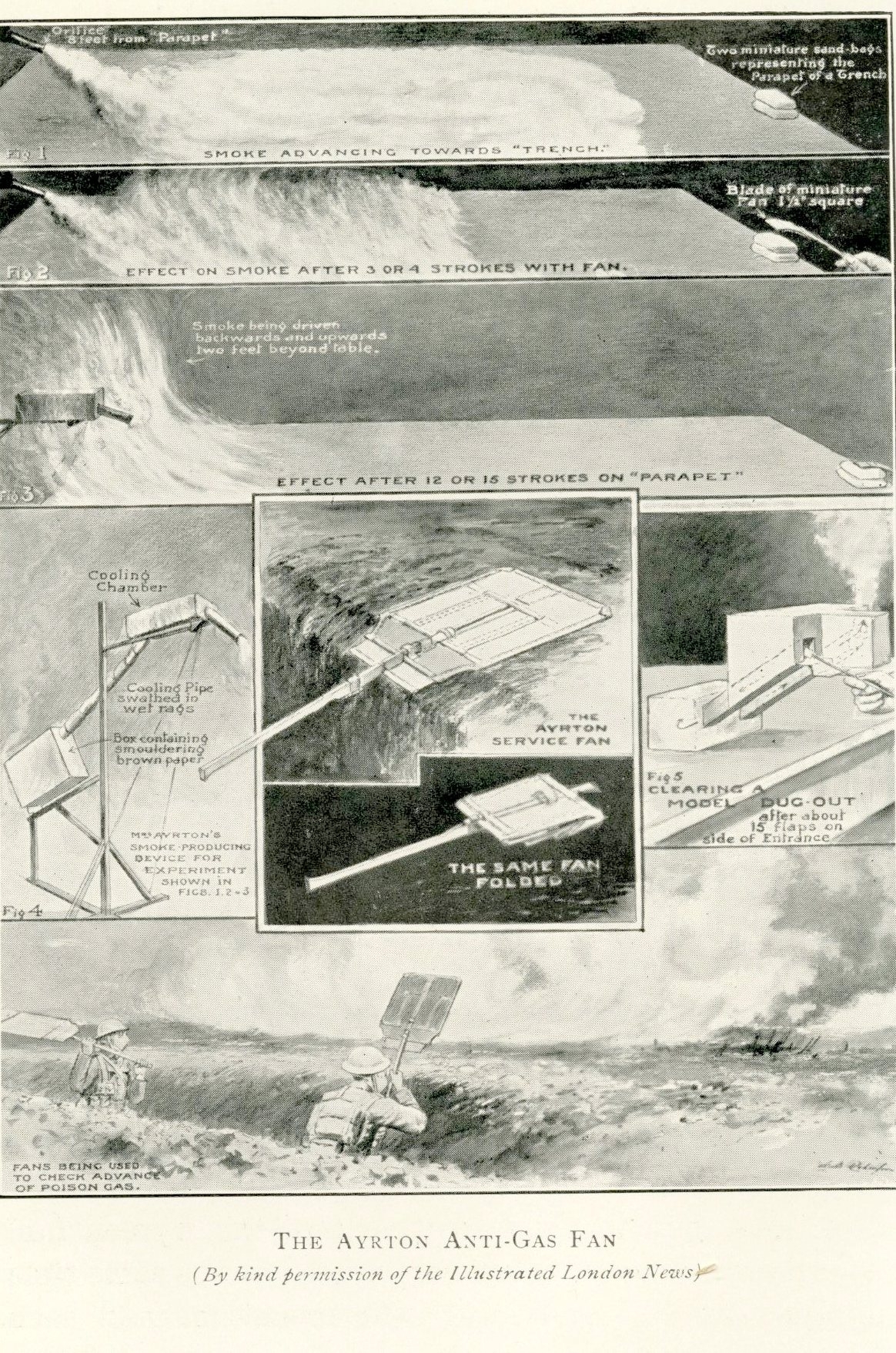
Determined to attribute research capacity to William alone, Armstrong saw no ‘reason to believe’ that Hertha’s research was ‘original in any special degree’ – despite her solo awards from both the IEE and Royal Society. He even alleged that she had been ‘far more subject to her husband’s lead’ than either organisation had imagined. Admitting that Hertha was ‘a capable worker’, he nevertheless dismissed her as a ‘complete specialist’ with neither the ‘extent nor depth of knowledge’ needed to give her a broad ‘grasp of her subject’. Unwilling to acknowledge the wide range of Hertha’s research from electric arc lighting to sand ripples, Armstrong even falsely claimed that the fan she invented for repelling poison gas in First World War trenches had been rejected by ‘the military authorities’.
While not mentioning his harsh Nature review, Evelyn Sharp’s Memoir pointedly notes that Ayrton was among several eminent feminists who had fiercely criticised Armstrong in 1909 for his apocalyptic assertion that the ‘revolt of women’ in seeking the vote would ‘fail’, and in so doing their revolt would destroy all humankind (Sharp, 214). As if further to discredit Armstrong’s negative views, Sharp offers a detailed and more charitable alternative to each of his defamatory comments. First, on the accusation that Hertha had shortened her husband’s life, Sharp makes clear that in all episodes of William’s health crises, she sacrificed her laboratory time to care for him. Thus when William was unable to work in autumn 1901, she gave up her own research to spend months of recuperation with him in Margate. (Sharp, 154)
The following year, the Ayrtons jointly decided to move to a quieter area of Kensington to alleviate his insomnia (Sharp, 155). Sharp notes that after spending the summer of 1906 nursing William through another ‘serious illness’, it was a great honour for Hertha to receive the award of the Royal Society’s prestigious Hughes medal for her original research on the electric arc and sand ripples (Sharp, 181). William’s health was evidently improved by this exciting news: proud of his wife’s achievements, he was gratified that the Royal Society had awarded Hertha the medal for her own original work, with no reference to his expertise (Sharp, 187-188). That same year Hertha was called upon to complete an Admiralty commission granted originally to William on carbons for electric arc searchlights, because his poor health prevented him from undertaking such expert work (Sharp p.189). Once again, Sharp showed Hertha’s capacity to work entirely independently of her husband, just as her friend Marie Curie had proven her capacity for solo work after the tragic death of Pierre Curie earlier that same year.
Most telling against Armstrong was Sharp’s story of the original reception of the gas-repellent fan that the long-widowed Hertha developed from research on sand ripples that had won her the Hughes medal. After developing prototypes and eventually securing the interest of the military at Chatham in spring 1915, Sharp reports:
All kinds of people came to see the fan operating in [Hertha’s] laboratory, while she was waiting for the military authorities to move, and among them Professor Armstrong, once her opponent in another field, who was much impressed by what he saw and afterwards helped the Chatham [military] people by telling them of an innocuous gas that could be used in the experiments… ‘magic’ was the word most constantly applied to it by those who came to her laboratory as sceptics and went away enthusiastic converts to its powers.
Even so, Mrs Ayrton (as she was conventionally known) had to battle against much institutional inertia for a whole year. Finally, in May 1916, an ‘instalment of 5,000 fans’ was dispatched to France, and her assistant Mr. Greenslade was sent out to supply training in their effective use. Even so, criticisms of the fan’s effectiveness in repelling poison gas were voiced by people who had never troubled to follow the instructions; and much to her disappointment, Ayrton learned that the army eventually supplied only 104,000 of her inventions for the entire Western front (Sharp, 260-261): this was far fewer than was needed to offer full protection to every trench. To counter the sceptics, several frontline World War 1 officers subsequently made it known in public – as well as in private correspondence – that their survival in gas-filled trenches owed much to their training and effective use of the Ayrton fan (Sharp, 262-267).
After experiencing the challenges of getting her fan deployed with the appropriate technique in the last two years of the Great War, Hertha Ayrton was one of many women who celebrated in March 1918 when those over the age of 30 were at last granted the vote. This was clearly a recognition of women’s contributions to a war that had not yet reached its final conclusion (Sharp 273). Ayrton’s fan is thus an epitome not only of her original creativity, but also of how saving lives in brutal warfare helped achieve the goals of the women’s suffrage movement.
This is the first of three planned blogposts on Hertha Ayrton’s career. The next one, in August, will look at the generally much more respectful obituaries of her wide-ranging career that came in later 1923. And the third will look at the 120th anniversary of her receipt of the Royal Society’s Hughes Medal in November 1906, and discuss how it inspired many women to campaign for equal opportunities to show their creative talents.
If you are interested in finding out more about Hertha (Marks) Ayrton’s incredible life and career, why not visit the Making Marks linktree linktr.ee/makingmarks, where you can also subscribe for updates on events and activities to celebrate her work as a S.T.E.M. pioneer.
If you would like to make your own marks on the history of STEM, why not join us on 10 June at Savoy Place, London, for a Wikipedia editathon focusing on Hertha Ayrton and her circle? You will learn how to edit Wikipedia and improve the internet, one fact at a time. To find out more, email archives@theiet.org
Sources:
Armstrong, Henry, ‘Mrs. Hertha Ayrton’. Nature, 112 (1923), pp. 800–801
Brandt, Danita, ‘Ayrton’s Nature obit: a monument to sexism in science’. Nature, 590 (2021) 551.
Locker, Anne, Making Marks: the ripple of a STEM pioneer IET Blogpost, March 2026.
Sharp, Evelyn, Hertha Ayrton: A Memoir (London: Edward Arnold, 1926).


1 Pingback