Guest blog by Peter Barker and Asha Gage, IET Archivist
An earlier IET Archives blog, The Story of Roy Barker – a Physicist with 70 Years with the IET, provided an initial account, written by the donor, of Barker’s career and the material deposited in the IET Archives. The initial exploration naturally focused on individual papers, patents and technical memoranda, each of which appeared to describe a particular research problem or application rather than the complete picture. The significance of some of the later work, particularly Barker’s mathematical work on control systems, was not appreciated in the context of his earlier research. Further examination of the collection has revealed connections between these apparently separate pieces of research, bringing to light the remarkable story that follows.
Introduction
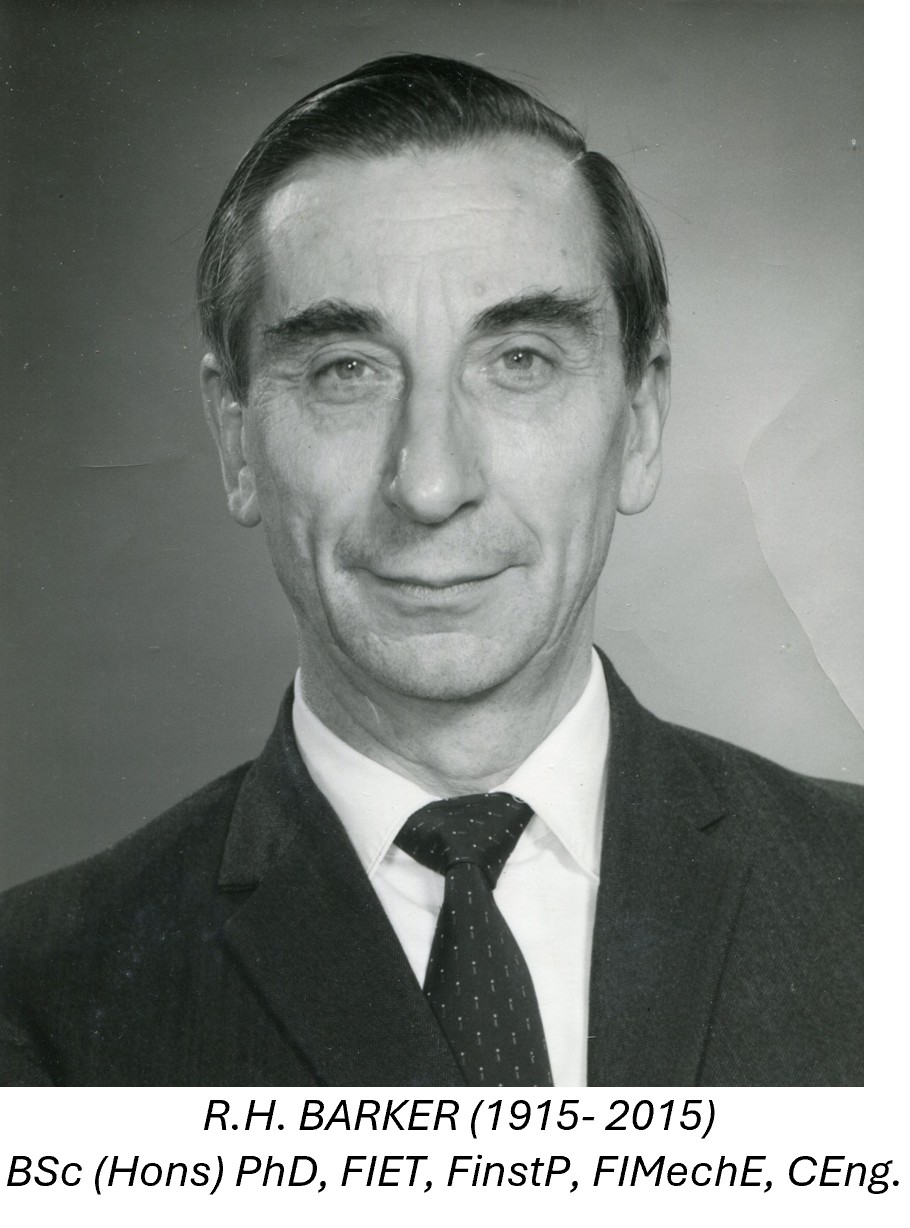
When the papers of engineer and physicist Ronald Hugh Barker were donated to the IET Archives, they appeared to record the career of a respected post-war researcher. As the collection was examined, it became clear that it documented a significant programme of research into the emerging field of digital engineering. Reports, patents, memoranda, correspondence and unpublished research papers revealed a body of work far broader than anyone had previously recognised.
Much of this research was undertaken within government defence establishments and initially circulated only through restricted technical reports. Individual documents provide only fragments of the picture, but together they show Barker addressing fundamental engineering problems at that time.
During the rapid expansion of electronic technology after the Second World War, Barker worked on the engineering problems of measuring physical quantities, transmitting information reliably and using that information for the automatic control of machines. Although this research was undertaken initially for missile guidance, he recognised its much wider industrial potential.
Barker is best remembered for the short 1953 paper describing the binary sequences that later became known as Barker codes1. Their importance will be explained later. They became so influential that this single publication came to define Barker’s reputation. However, the archive reveals a much broader programme of research that extended well beyond Barker codes into the emerging field of digital control engineering.
Background
After graduating from the University of Hull with First Class honours in Special Physics, Barker joined Standard Telephones and Cables (STC), where he worked on thermionic valves and X-ray equipment. With the outbreak of the Second World War, he sought work that would contribute more directly to the national war effort and transferred to the Ministry of Supply as an Experimental Officer at the Signals Experimental Establishment (SEE).
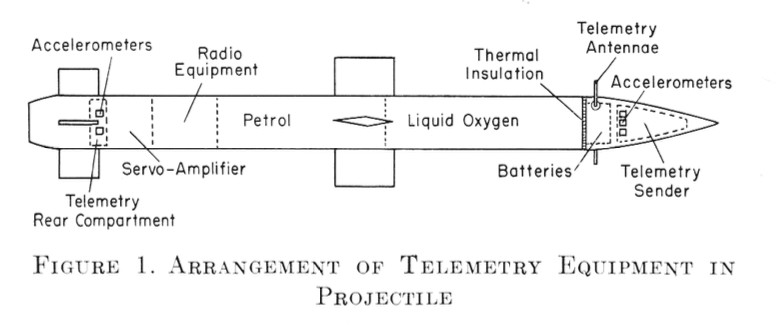
Following heavy bombing of Woolwich, the Establishment was relocated to Christchurch, Dorset, where it became the Signals Research and Development Establishment (SRDE). Here Barker initially worked on frequency-modulated army radio communications before becoming involved in one of Britain’s earliest guided missile programmes. His physics degree and mathematics provided an excellent educational background for the work he was about to embark on. Having gained rapid promotion, he was assigned to work on the telemetry of the Ministry of Supply G.A.P project (Guided Anti-aircraft Projectile)2. This experience led to being selected to prepare a technical report on the guidance and telemetry systems of the German A4 (V-2) rocket code named Messina3. Together, this work placed him at the forefront of Britain’s post-war developments in telemetry and control engineering.
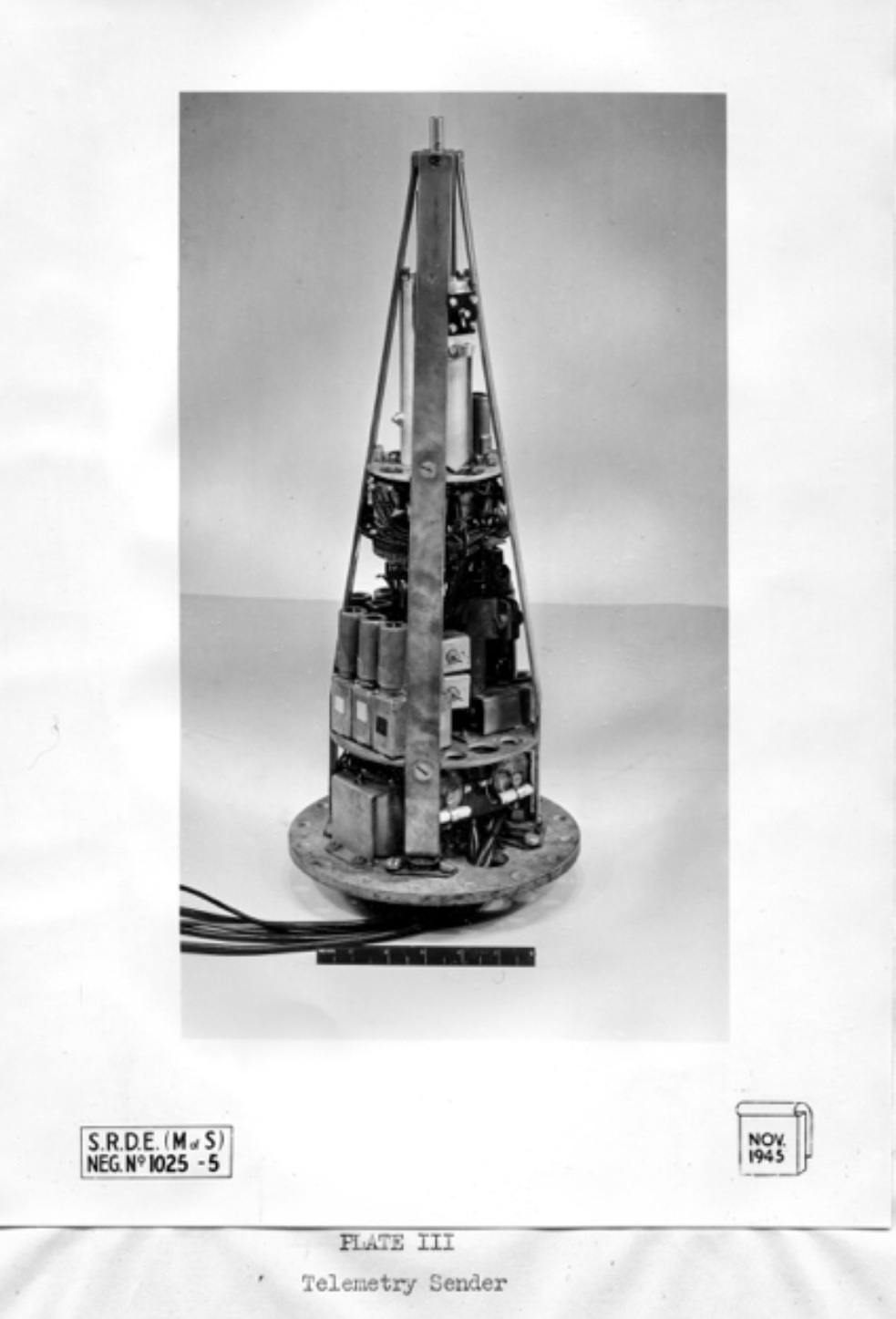
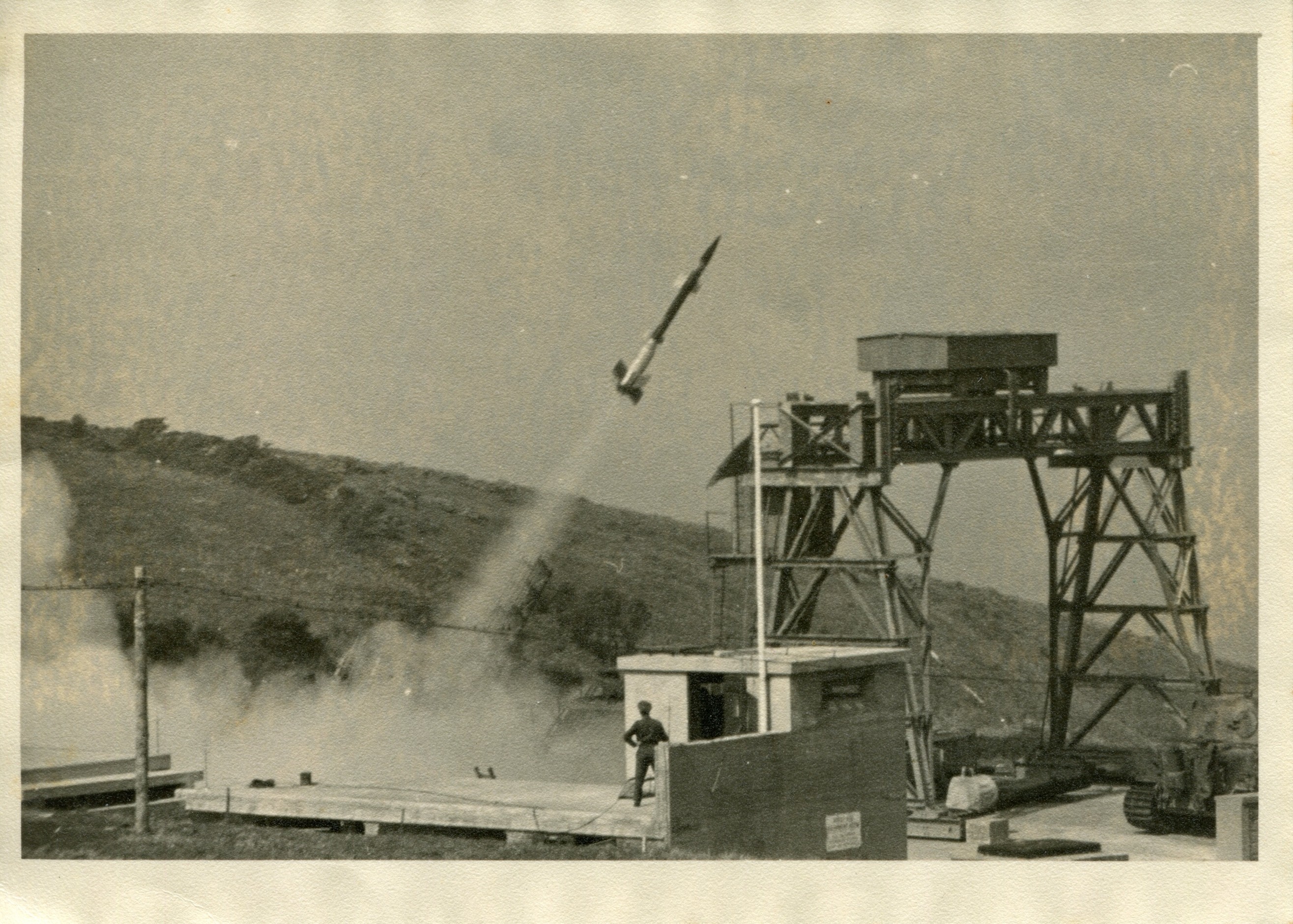
Soon afterwards Barker was given responsibility for developing the telemetry equipment for what became Britain’s first successful telemetry-guided missile, known as LOPGAP (Liquid Oxygen and Petrol Guided Anti-Aircraft Projectile). In May 1947 his telemetry guidance system was successful at Ynyslas in Wales; an achievement that demonstrated the practical reliability of the telemetry systems developed under his direction.
Although miniaturised and re-engineered, the system was still in use in 19654
In February 1946 Barker, now a leading scientist in telemetry, was selected to travel to Princeton University in the USA to attend the First International Symposium on Telemetering. This was one of the earliest international conferences devoted to missile instrumentation and electronics. Scientists and engineers from Britain and the United States met to exchange ideas at a time when both countries were working to develop defensive guided missiles. The years following the Second World War were uncertain and defence capabilities were crucial. International collaboration was essential because many of the engineering problems were entirely new and very challenging.
The proceedings were compiled as Bumblebee Report No. 42, produced for the American Bumblebee guided missile programme. At the time, the report had a restricted circulation because of its military significance and was only declassified many years later. Today, a rare copy of this historical document is preserved in the IET Archives, providing a remarkable record of this early international collaboration5.
At the symposium, Barker presented two papers describing work underway at SRDE, Christchurch, one of which described the telemetry being used for the LOPGAP project. During the conference he met Professor L.L. Rauch of Princeton University, a mathematician who subsequently became a leading American researcher in telemetry. Their professional relationship developed into a lifelong friendship, reflected in correspondence, some of which survives in the archive decades later.
Designing a guided missile involved far more than propulsion. Engineers faced three fundamental problems to guide and maintain the stability of the missile: (1) how to measure the missile’s movement accurately, (2) how to represent and transmit that information digitally and (3) how to use it to control the missile, despite delays in measurement, transmission and calculation.
Taken together, the archive shows Barker addressing all three of these fundamental engineering problems that would later become central to digital engineering.
Some of the measurements required to control a missile included acceleration, rotation, altitude and position. The resulting information had to be represented in a form that could be processed and transmitted, while the control system had to take account of delays before corrective action could be applied. These were formidable scientific and engineering challenges, requiring expertise in physics, electronics, mechanics and mathematics.
Although this article presents these challenges as three distinct areas for clarity, in practice they were closely interconnected, with developments in measurement, communications and control overlapping and influencing one another rather than being solved as separate problems.
The archive also reveals how this research was disseminated. Technical memoranda were circulated through an internal network of government research establishments, defence organisations, military training schools and selected civilian communications organisations, including the General Post Office and the BBC. Although these reports remained restricted and were not available through the open scientific literature, they enabled new engineering ideas to be shared among organisations working on emerging digital technologies.
The Transition to Digital Engineering – Digital measurement
One of the practical problems was how to represent physical measurements digitally. By 1948, Barker was developing techniques for representing physical measurements in digital form. An early patent specification GB650913A ‘ Improvements in or Relating to Apparatus for the Presentation of Data in a Digital Form’ preserved in the archive, filed on 23 August 1948, reveals the direction Barker’s research was taking6. Although his examples centred on the angular position of a rotating shaft, he recognised that the same principle would be “equally applicable to linear movement and, ultimately, to the measurement and recording of the position of a member undergoing almost any conceivable movement.”7 The resulting measurement could be represented as a binary number. He also described how the digital information could be converted into a pulse-code-modulated signal for transmission, making the technique particularly suitable for telemetering systems.
This marked an important step in how measurements could be represented digitally. Barker’s work did not remain a theoretical proposal. He devised a patterned disc carrying concentric binary markings, scanned photoelectrically so that the position of a rotating shaft was converted directly into a binary number. A prototype was constructed which involved an external specialist company, Hilger and Watts, to manufacture the optical rings. The device was successfully demonstrated at the 1951 Conference on Automatic Control at Cranfield8. The system demonstrated that the angular position of a rotating shaft could be converted into binary form and that the resulting digital information could then be transmitted using pulse-code modulation. Similar in operation, Barker’s device can be regarded as a very early form of optical encoder, converting mechanical position directly into digital information suitable for subsequent processing and control. Importantly, this was a practical demonstration of digital measurement, showing that physical movement could be measured, represented as precise digital information and transmitted, rather than just a theoretical concept. The practical engineering solution could be applied to real measurement and the digital control of machinery.
The circulation list attached to the 1949 memorandum shows that Barker’s work had a limited distribution within SRDE and to a network of government laboratories and industrial research organisations9. This suggests that the research on digital measurement techniques being developed for missile telemetry were already being recognised as having wider applications in communications and electronic instrumentation.
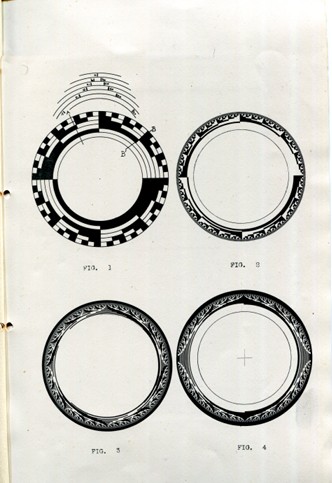
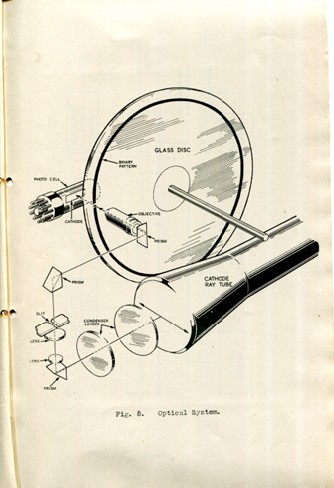
Today, optical encoders are found in many industrial processes, robots, machine tools, aircraft, autonomous cars and countless other electronic systems. Barker’s design represents one of the earliest known examples of the principle that remains at the heart of modern optical encoders.
Once physical measurements could be represented as binary data, new questions naturally followed. How could that information be transmitted without error? How could the receiving equipment recognise where one item of a data stream ended and the next began? Once the data was received, how could those digital measurements be used to control a machine automatically? These questions would occupy Barker for much of the following decade and lead to his pioneering work on digital communications. Digital representation was the first stage in a complete engineering system linking measurement, communication and control.
Synchronisation of Digital Communications – Barker Codes
Representing physical measurements in binary form solved only part of the problem. The information received had to be processed and understood by the receiver.
Digital representation offered an increasingly useful way of representing, transmitting and processing information reliably. Unlike an analogue signal, which can become progressively distorted by noise and interference, digital information could be represented by distinct values and reproduced without the same accumulation of distortion. However, the transmission of digital digits in binary code presented a different but related problem: how could pulsed signals be transmitted and synchronised reliably in the presence of noise and interference? In Barker’s own words “A sequence of binary digits has very little meaning unless the significance of the individual digits is known. If one digit can be labelled in some way others may be identified by counting.”
Electrical interference, fading radio signals and timing errors could corrupt a stream of digital pulses. The receiving equipment had to recognise the individual pulses and determine where each item of information began and ended. Reliable synchronisation therefore became a central engineering challenge in early digital communication. Barker’s best-known work arose from this practical problem. He investigated binary sequences with particularly useful correlation properties. In a paper published in 1953, he described several binary sequences that possessed an exceptional ability to distinguish the correct synchronisation point from other possible positions. Although modest in length, the paper described a practical solution to a difficult engineering problem. These sequences later became internationally known as Barker codes.
Both the original paper Group Synchronising of Binary Digits, dated July 1952, and a printed extract of the paper was paper published by Butterworths in a publication dated 1953, titled ‘Communication Theory’ 1953 pages 273 – 287 are contained in the archive10.
Their importance lies in their ability to allow a receiver to detect a known signal even when it is buried in noise or weakened by interference. A known Barker code, inserted into the transmitted signal, allows the receiver to compare the incoming signal with the same code at different points in time. This process, known as correlation, measures how closely the two patterns match. When they are correctly aligned, the correlation produces a strong peak, while other alignments produce much smaller responses. The peak therefore identifies the point at which the Barker code begins, allowing the receiver to establish reliable synchronisation even under difficult operating conditions. This made Barker codes particularly useful for telemetry.
Barker codes addressed the problem of transmitting and synchronising digital information reliably. Today, Barker codes continue to have applications in radar, satellite and space communications, global navigation systems, broadband, ultrasound imaging and radio-frequency identification (RFID), among other technologies.
Although Barker codes secured Ronald Hugh Barker’s place in engineering history, there are later documents that show the codes were not an isolated invention. Instead, they are only part of a programme of research of emerging digital engineering that was far more extensive.
The Development of Digital Control Engineering
By the early 1950s, Barker’s work was moving from the problems of representing and transmitting digital information towards the more difficult question of how that information could be used to control a machine.
Reliable digital communication solved only part of the engineering problem. Once physical measurements had been converted into binary form and transmitted successfully, they still had to be used to control the motion of a machine. Digital information arrived as a stream of pulses representing measurements taken at intervals, rather than as a continuously varying signal. The delays introduced in measuring, transmitting and processing this information could also affect the behaviour and stability of the control system.
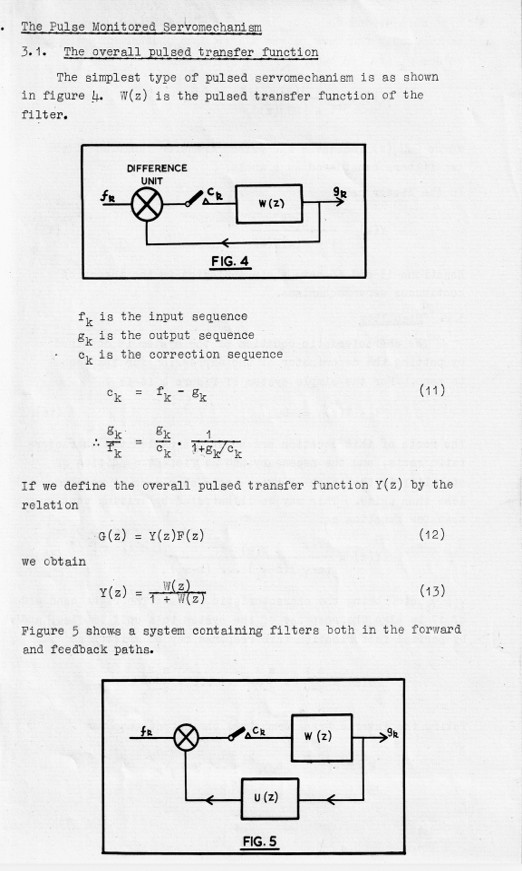
A control system works through feedback: it measures how a machine is responding and uses that information to make corrections. In practice, there is inevitably a delay between taking a measurement and applying the resulting correction.
The challenge was to find a practical way for the control system to use this digital information to determine how the machine was responding and make the necessary corrections, taking account of the delay. Barker investigated how such delays affected the behaviour and stability of pulse-monitored control systems.
A particularly significant document is Barker’s November 1950 SRDE Report No. 1046, The Theory of Pulse Monitored Servomechanisms and their Use for Prediction11. It shows him developing mathematical methods for predicting how a feedback control system would behave when measurements were received as pulses at intervals. This parallel research is described in the 1950 Technical Memorandum, The Stability of Pulse Monitored Servo Mechanisms having a Delayed Feedback Loop Res 135.12 .
Before this stage of the research, engineers often had to design and build circuitry and then test it experimentally to determine how it would behave in a particular situation. This could be time-consuming, expensive and prone to error.
The underlying idea of using transforms was not new, but Barker developed mathematical methods for applying them to sequences of sampled information and to the practical problems of prediction, feedback, delay and stability. Among the analytical methods developed during this work was the pulse transfer function, presented in his 1952 paper, The Pulse Transfer Function and its Application to Sampling Servo Systems 1952.13 It provided engineers with a mathematical means of analysing the stability and performance of sampled-data systems and predicting their behaviour before a physical system was constructed. The predictions could then be tested experimentally against the behaviour of a working system allowing them to check how the pulse-controlled system would behave under a range of operating conditions. Barker described his table of transform functions as the first set of these transforms to be published14. His subsequent doctoral research developed the work further and tested the mathematical predictions experimentally.
The significance of this work was recognised by the Institution of Electrical Engineers, which awarded Barker the Oliver Heaviside Premium in 1953. His research formed part of the growing body of knowledge that was establishing the methods needed to design increasingly sophisticated sampled-data and digital control systems during the formative years of digital engineering. The principles remain fundamental to modern digital control systems: measurements are taken, processed and used to make corrective adjustments, with the timing of that process still an important consideration.
The archive contains Barker’s doctoral thesis, The Servo Problem Involved in the Transmission of Angular Data by Pulse Code Modulation, completed in 1954 15 . Bringing together several years of research undertaken within Britain’s defence establishments, it provides a unique account of the development of early digital control engineering. Before the thesis could be submitted to the University of London, it was referred to the Ministry of Supply for approval. A memorandum preserved in the archive records that the Department raised “no objection” to its submission. The thesis demonstrates Barker’s awareness of contemporary work by leading researchers on sampled-data systems. It also identifies the practical engineering problems introduced by sampling, time delays and quantisation, and shows both theoretically and experimentally that digital servo systems could be designed to operate reliably.
By 1955 Barker had left the Signals Research and Development Establishment to become Assistant Director at the Ministry of Supply Headquarters in London. Although much of his research had been completed, it still existed largely in restricted defence reports and was not immediately available to the wider engineering community. Its release was subject to official clearance procedures, delaying its wider publication.
His research brought together binary encoding, digital measurement, pulse-code transmission and sampled-data analysis to the point where the resulting engineering system could be tested experimentally.
First issued in 1954 and subsequently published by the IEE in 1956, A Servo System for Digital Data Transmission 16 described practical testing of Barker’s transform method and showed how physical measurements could be converted into binary form, transmitted, compared with the required value and used to control a servo mechanism automatically. Barker constructed an analogue servo system for comparison with the digital system and experimentally examined its response, comparing measured results with theoretical predictions. This demonstrated that the mathematical methods could be applied to a functioning control system and tested in practice, providing tangible evidence of Barker’s fundamental practical engineering approach. The complete block diagram presented in the paper illustrates an integrated digital control system incorporating measurement, digital transmission, error detection feedback and automatic control.
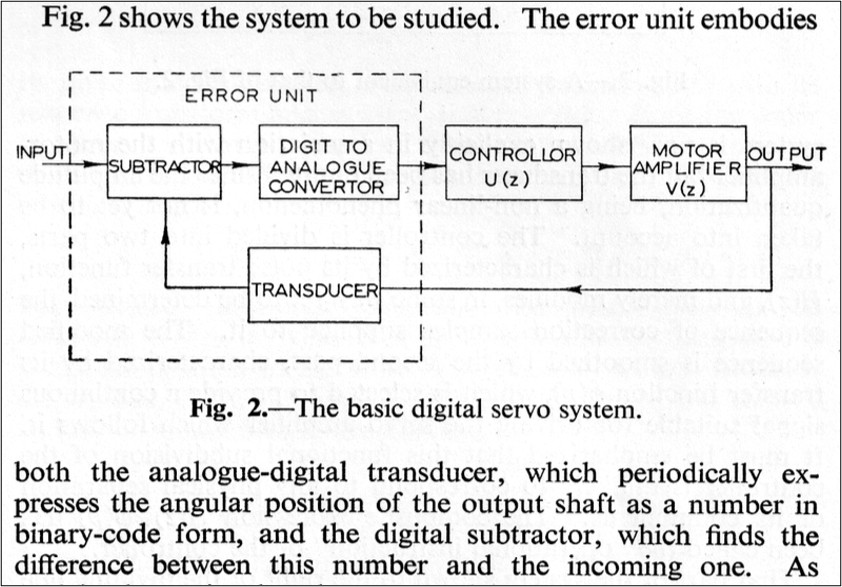
The practical nature of this work is further illustrated by the companion paper, A Transducer for Digital Data-Transmission Systems – Proceedings of The Institution Vol 103, Part B, No 7, January 1956 page 42-51. Together, the two papers provide a clear published account of Barker’s approach to practical digital engineering.
The archive also shows why this work appeared in the technical literature only gradually. A covering letter preserved with ‘A Transducer for Digital Data-Transmission Systems’ 17 records that the paper had been abstracted from Barker’s thesis, which had previously been approved for publication by the Ministry of Supply in April 1954. The research had therefore already been undertaken within the restricted environment of the official research establishments before it was progressively released through IEE publications.
From Digital Control to Automation
Barker’s pulse transfer functions did not control machines directly. They provided engineers with the mathematical framework needed to reconstruct sampled data, filter noise, account for delays and predict system behaviour before a control system was built. As digital computers became available during the 1950s, these methods could increasingly be applied to the processing of sampled information and to the generation of control actions. Barker’s 1957 paper The Reconstruction of Sampled Data, presented at the Data Processing and Automatic Computing Machines Conference at the Weapons Research Establishment, Salisbury, S. Australia, illustrates this transition from mathematical analysis towards practical data-processing and sampled-data control engineering18 .
Summary of research sequence
- Digital measurement Barker first developed methods of representing physical measurements (such as shaft angle) in binary digital form.
- Pulse Code Modulation (PCM) Those binary measurements could then be transmitted reliably as pulse trains. Barker’s work on telerotation demonstrated how angular position could be represented and transmitted digitally
- Pulse-code servomechanisms Once measurements and commands existed as sequences of pulses, they could be used to control an electromechanical device. The actuator itself remained an analogue machine (motor, servo, etc.), but the information driving it was digital.
- Synchronising Barker developed binary sequences with useful correlation properties to solve the practical problem of synchronising transmitted digital signals in the presence of noise and interference. Published in 1953, these sequences became known as Barker codes that provide a reliable means of identifying the correct position within a received stream of binary pulse.
- Pulse transfer functions This was Barker’s mathematical breakthrough. Conventional Laplace methods assumed continuous signals, whereas pulse-code systems only updated at discrete sampling instants. Barker developed pulse transfer functions (otherwise known as z-transforms) to predict the behaviour and stability of these sampled systems.
- Sampled-data (digital) control With this mathematical framework, engineers could design and analyse control systems that operated using digital samples rather than continuous analogue signals. The transform functions were not used to control the machine directly. They were the mathematical tool that allowed engineers to analyse, predict and design pulse-code control systems.
- Engineering automation The significance of Barker’s work was not that the mathematics was controlling the machine directly, but that the prediction enabled engineers to model and design sampled-data control systems before they were built. As Barker later observed in his 1972 IEE Chairman’s Address, “The ability to control a plant presupposes an ability to model it.”
Recognition
Looking back today, the archive reveals a coherent progression in Barker’s research. Beginning with the digital measurement of physical quantities, progressing through reliable pulse-code communication, and culminating in practical digital servo systems, the documents record one of the earliest integrated programmes of research into digital engineering. Later developments, including work by Ragazzini and Zadeh, expressed related methods using the mathematical notation of the z-transform, but the archive indicates that Barker had already addressed many of the underlying engineering problems during the formative years of sampled-data control, describing his approach in terms of pulse transfer functions.
Barker’s work enabled engineers to model, predict and design sampled-data control systems before they were built. These methods transformed sampled measurements into reliable information for automatic control. As electronic computers became available during the 1950s, they provided a practical means of performing these calculations automatically, allowing increasingly complex digital control systems to be implemented in engineering practice.
This transition is illustrated by a 1958 SRDE technical memorandum on telemetry 19 for the Blue Streak re-entry vehicle, in which Barker evaluated alternative telemetry systems for one of Britain’s most advanced missile programmes. The report demonstrates that he had moved from solving individual research problems to his expertise being sought to advise on complex electronic engineering developments.
Barker’s role was changing from research to scientific leadership. The archive shows that Barker’s influence did not end with the publication of his research papers. Correspondence preserved among his papers reveals that, by the late 1950s, he had become an active participant in an international community of scientists developing the new disciplines of digital communications, sampled-data control and computer control. Although the surviving correspondence represents only a small part of Barker’s professional exchanges during his years with the Ministry of Supply, it provides a valuable insight into the regard in which his work was held by leading researchers in Britain, the United States and the Soviet Union.
Among the correspondence is a request from Donald Baumann of Air Associates Inc., New Jersey, for a copy of Barker’s 1952 pulse-transfer paper after Professor John Ragazzini had described it as “a classic in the field.”20. Further letters show Barker discussing technical problems directly with Ragazzini, while Professor John G. Truxal invited him to contribute to an international symposium on Computers in Control Systems, describing him as “an obvious leader in this field.”21 The archive also contains correspondence with Professor Ya. Z. Tsypkin of the Institute of Automatics and Telemechanics in Moscow, Professor Eliahu Jury, and R. Brinkley, Managing Director of Pye Telecommunications. Together these letters demonstrate that Barker’s expertise was recognised well beyond his own laboratory and that he was contributing to the international exchange of ideas during the formative years of digital engineering.
His scientific career subsequently developed into senior leadership roles that followed. In 1959 he became Deputy Director of the Central Electricity Research Laboratories (CERL), later served as Technical Director of R. B. Pullin & Company, and subsequently returned to government service as Deputy Director in charge of the Royal Armament Research and Development Establishment (RARDE). Throughout this period, he also played an active role within the Institution of Electrical Engineers, serving on technical committees and later chairing its Control and Automation Division. His career had progressed from pioneering research to the leadership of major scientific and engineering organisations.
Professional involvement
Barker’s scientific leadership extended beyond his own appointments. A Fellow of the Institution of Electrical Engineers from 1960, he contributed to the profession through service on a number of Institution committees and later chaired its Control and Automation Division. He also represented the IEE on the Institution of Mechanical Engineers’ Automatic Control Group, served on the Council of the British Scientific Instrument Research Association, and acted as an external examiner for the Universities of London and Manchester. These roles reflected his commitment to advancing engineering as a profession through leadership, education and collaboration. Barker remained an active member of the Institution for more than seventy years. See also the Ronald Hugh Barker biography on the IET Archives website.
Conclusion
Archives preserve evidence, but they rarely tell the whole story. Individual reports, patents, memoranda, correspondence and photographs often appear unrelated when viewed in isolation. It is only by bringing these sources together and placing them in their historical context that the broader significance of the work begins to emerge.
The Ronald Hugh Barker archive reveals far more than the origin of Barker codes. It documents a coherent programme of post-war research that progressed from digital measurement, through digital communications, to the practical development of sampled-data and digital control systems. Much of this work remained largely hidden for many years because it was undertaken within government research establishments and circulated initially through internal reports before gradually entering the open engineering literature.
Today the archive provides an important record of the formative years of digital engineering. It demonstrates how one engineer helped address many of the practical problems involved in measuring physical quantities digitally, transmitting information reliably and using that information to control machines automatically. Preserved within the IET Archives, these documents provide an important resource for future historians seeking to understand how digital measurement, digital communications and digital control evolved together to provide the foundations of modern digital engineering.
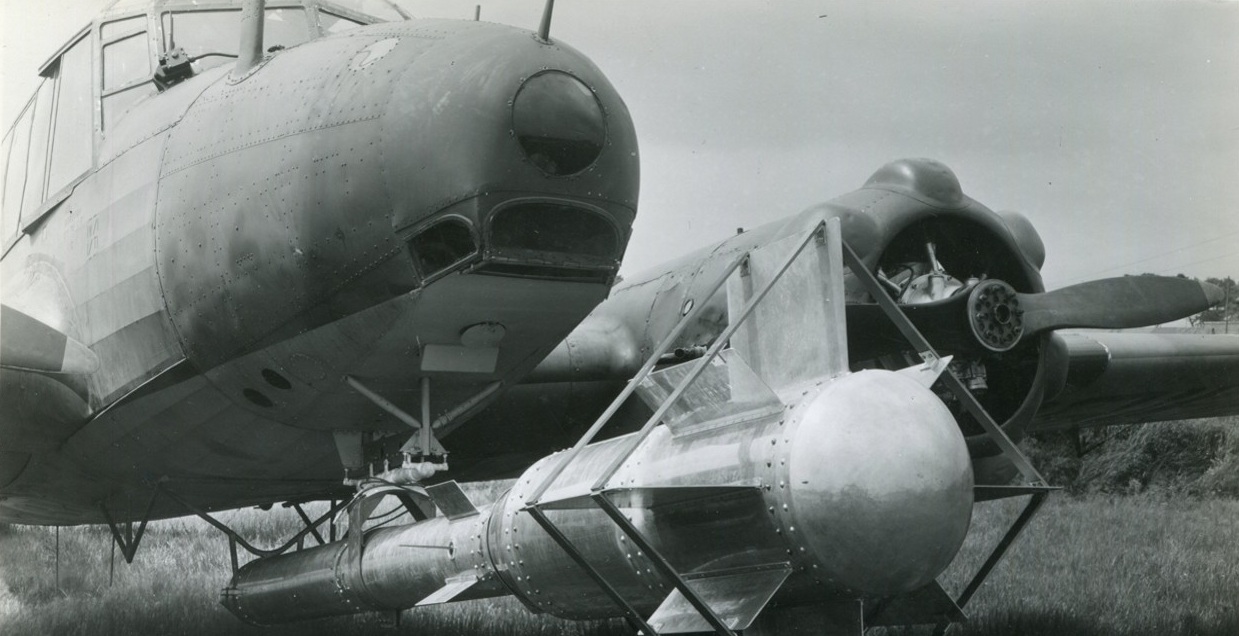
Feature image above: Fleet Air Arm Avro Anson aircraft – Telemetry trials of LOPGAP Missile at Sommerfield Aerodrome 29 May 1945 UK0108 NAEST 301/02/04
References
- Group Synchronizing of binary digital systems reprinted from ‘Communication Theory’ 1953 IET Archives NAEST 301/02/01/1 ↩︎
- Digital copy investigating advanced radio telemetry techniques for testing on inert guided weapons IET Archives NAEST 301/02/04/1 ↩︎
- MRATHS SRDE Box 121 ↩︎
- R H Barker RARDE resume IET Archives NAEST 301/06/3 ↩︎
- Bumblebee Report No. 42 IET Archives NAEST 301/05/1 ↩︎
- ‘Improvements in or relating to apparatus for the presentation of data in a digital form’ IET Archives NAEST 301/03/01/1 ↩︎
- Ibid. ↩︎
- R H Barker ‘The measurement of angle using the binary digital scale’ IET Archives NAEST 301/05/4 ↩︎
- ‘The conversion of shaft position data to binary pulse code form’, August 1949 IET Archives NAEST 301/02/01/4 ↩︎
- IET Archives NAEST 301/02/01/1 and NAEST 301/02/01/3 ↩︎
- IET Archives NAEST 301/02/01/2 ↩︎
- IET Archives NAEST 301/02/02/1 ↩︎
- ‘The pulse transfer function and its application to sampling servo-systems’ IEE Monograph 43 by R H Barker accessed via the IET Digital Library: Proceedings of the IEE – Part II: Power Engineering Volume 99, Issue 71 https://doi.org/10.1049/pi-2.1952.0120 ↩︎
- R H Barker’s Professional Review submitted for Fellow of the IMechE in 1974 IET Archives NAEST 301/06/4 ↩︎
- R H Barker PhD Thesis IET Archives NAEST 301/01/01/2 ↩︎
- IET Archives NAEST 301/02/01/7 ↩︎
- IET Archives NAEST 301/02/01/8 ↩︎
- IET Archives NAEST 301/05/5 ↩︎
- Blue Streak Telemetry for Re-Entry Head Initial Assessment Technical Memorandum No Res 215 MRATHS April 1958; Box 1319 ↩︎
- Letter Air Associates 10 April 1957 IET Archives NAEST 301/04/03 ↩︎
- Letter dated 25 March 1957 from Polytechnic of Brooklyn IET Archives NAEST 301/04/03 ↩︎
Primary Sources
Internal Reports and Memoranda
- Barker, R.H. Report on Telemetry Equipment Used in Development of German A4 Rocket at Peenemünde (Messina). Ministry of Supply Internal Memorandum No. 60, 9 November 1945. Original held by Malvern Radar and Technology History Society (MRATHS )
- Barker, R.H. The Theory of Pulsed Monitored Servomechanisms and Their Use for Prediction. SRDE Report No. 1046, 1950.
- Barker, R.H. The Stability of Pulse-Monitored Servomechanisms Having a Delay in the Feedback Loop. SRDE Technical Report, 1950.
- Ministry of Supply. Memorandum authorising submission of Barker’s PhD thesis to the University of London (“No Objection” Memorandum), 1954.
- Barker, R.H. Improvements in or relating to Apparatus for the Representation of Data in Binary Digital Form. British Patent Specification GB650913A application 23 August 1948; published 7 March 1951.
- Barker, R.H. Electrical Signalling and/or Amplifying Systems. US Patent No. 2,700,696, 1955.
- Barker, R.H. Synchronising Arrangements for Pulse Code Systems. Application 25 February 1952 GB4924/52A: US Patent No. 2,721,318, 18 October 1955.
Conference Papers
- Barker, R.H. A Variable Reactance Accelerometer. Proceedings of the First International Symposium on Telemetering, Princeton University, 1946 (Bumblebee Report No. 42).
- Barker, R.H. Work on Telemetry at S.R.D.E. Proceedings of the First International Symposium on Telemetering, Princeton University, 1946 (Bumblebee Report No. 42).
- Barker R.H. Improvements in or relating to Apparatus for Data in Binary Digital Form, 1948 Patent GB650913A
- Barker, R.H. The Conversion of Shaft Position Data to Binary Pulse Code Form, SRDE Technical Memorandum No. RES 124 (Restricted) August 1949.
- Barker, R.H.- DEMONSTRATION – A Measurement of Angle Using the Binary Digital Scale. Conference on Automatic Control, Cranfield, July 1951.
- Barker, R.H.The Reconstruction of Sampled Data. Proceedings of the Data Processing and Automatic Computing Machines Conference, Weapons Research Establishment, Salisbury, Australia, June 1957.
Published Papers
- Barker, R.H. The Pulse Transfer Function and its Application to Sampling Servo Systems. Proceedings of the IEE, Vol. 99, Part IV, Monograph No. 43, pp. 302–317, 1952.
- Barker, R.H. Group Synchronizing of Binary Digital Systems, in Communication Theory. pp. 273–287, in Communication Theory, published in 1953 by Butterworth.
- Barker, R.H. A Transducer for Digital Data-Transmission Systems. Proceedings of the Institution of Electrical Engineers, Vol. 103, Part B, No. 7, page 42-51 January 1956.
- Barker, R.H. A Servo System for Digital Data Transmission. Proceedings of the Institution of Electrical Engineers, Vol. 103, Part B, No. 7, page 52-64 January 1956.
- Barker, R.H. Chairman’s Address: Communications in Control. Institution of Electrical Engineers, Control and Automation Division, Volume 119, Issue 1, January 1972, p. 77 – 82
Thesis
- Barker, R.H. The Servo Problem Involved in the Transmission of Angular Data by Pulse Code Modulation. PhD Thesis, University of London, 1954.
Correspondence
- Correspondence with Ragazzini, Truxal, Baumann, Tsypkin, Jury, Brinkley, and others. (see correspondence in series NAEST 301/04)
Awards
- Institution of Electrical Engineers. Certificate of the award of The Heaviside Premium to R.H. Barker, 1953. IET Archives, Ronald Hugh Barker papers, NAEST 301.
Source: Ronald Hugh Barker archive papers IET Archives reference NAEST 301.
Further Reading
- Bennett, S. A History of Control Engineering, 1800–1930. Institution of Electrical Engineers, 1979.
- Bennett, S. A History of Control Engineering, 1930–1955. Institution of Electrical Engineers, 1993.
Related links
- Ronald Hugh Barker Biography (1915-2015)
- R H Barker papers in the IET Archives
- R H Barker articles published in the IET Digital Library
- The Story of Roy Barker – a Physicist with 70 Years with the IET
External links
Ronald Hugh Barker – links to Wikipedia
Barker code – links to Wikipedia
Keywords


Leave a Reply