Daniel Simkin, IET Library Deputy Library Manager
Jean-Baptiste Du Halde’s The General History of China: Containing a geographical, historical, chronological, political and physical description of the empire of China, Chinese-Tartary, Corea, and Thibet (China, the regions of Manchuria, Mongolia and Xinjiang, Korea and Tibet) was first published in 1735. The edition held at the IET is the third edition comprised of four volumes published in 1741. The book is part of the collection of Silvanus P. Thompson purchased in 1917 by the IET. Thompson was an avid collector of scientific books and added volumes in numerous disciplines and European languages to his collection during his life.
Jean-Baptiste Du Halde was born in Paris in 1674 and entered the Society of Jesuits in 1692 becoming a professor at the College of Paris. The Jesuits are an order within the Catholic Church founded in 1540 and were well known for their missionary work in the 16th and 18th centuries. The most notable English Jesuits are probably the poet Gerard Manley Hopkins and the philosopher Frederick Copleston. The third edition of this work was translated from French by Richard Brookes. He was an English physician who as well as well as writing his own books across geography, medicine and natural history translated notable works from French including The General History of China and The Natural History of Chocolate, an 18th century work on the production of chocolate and its supposed health benefits written by the French author D. Quélus. This edition was published by John Watts in London. Watts was a renowned printer and publisher operating print shops in Bow Street, Covent Garden and then Lincoln’s Inn Fields in London. The earlier editions were published in Paris and then the Netherlands before this third edition in English.
The General History of China is based on the reports of 27 Jesuit missionaries who had travelled to China, with Du Halde, who himself never visited the country, acting as editor. The Jesuit Order had first sent missionaries to China in 1552 which led to a failed attempt to reach mainland China. As well as seeking to convert people to Christianity the Jesuits and Chinese society at the time engaged in cultural exchanges of knowledge. The Jesuits brought with them European books on astronomy, mathematics and mechanics. In turn they brought back to Europe translations they had made of the philosopher Confucius and Chinese books on science and technology. Although the claim that the Chinese lacked musical notation and this was introduced by the Jesuits is false. The first Jesuit missions succeeded by adopting local customs and winning favour with the courts of the ruling dynasties but the nature of later waves of missionaries in the 19th century reflected growing Sinophobia in Europe and Western imperialism. On 1 October 1949 following victory over the US backed nationalists, Mao Zedong, the Chairman of the Chinese Communist Party, declared China a people’s republic and viewing the Catholic Church as an instrument of Western imperialism expelled the Jesuits during the period 1951-1954.
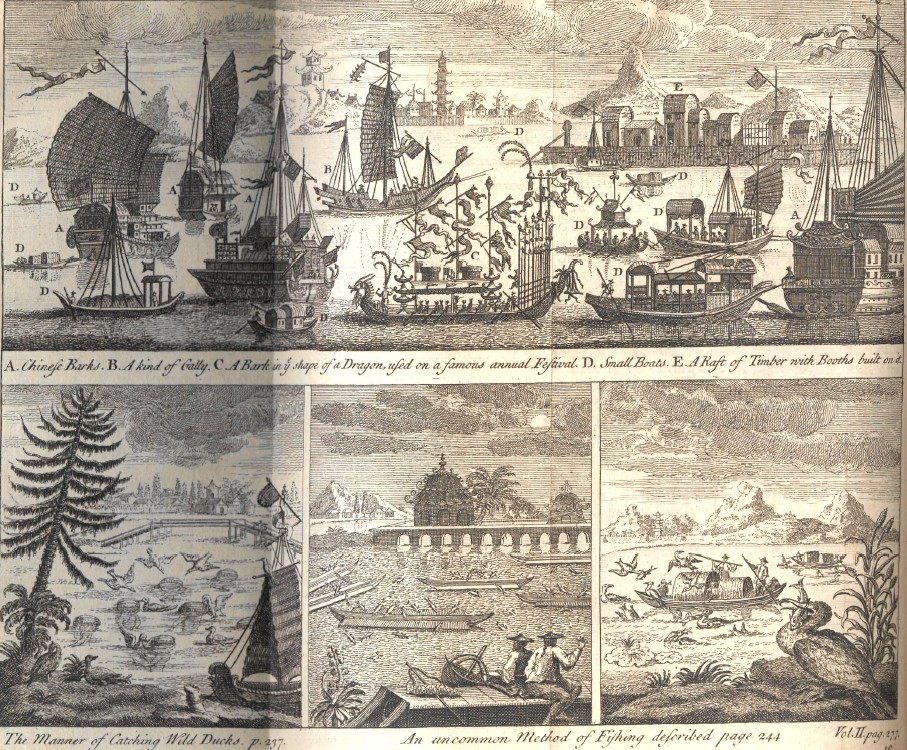
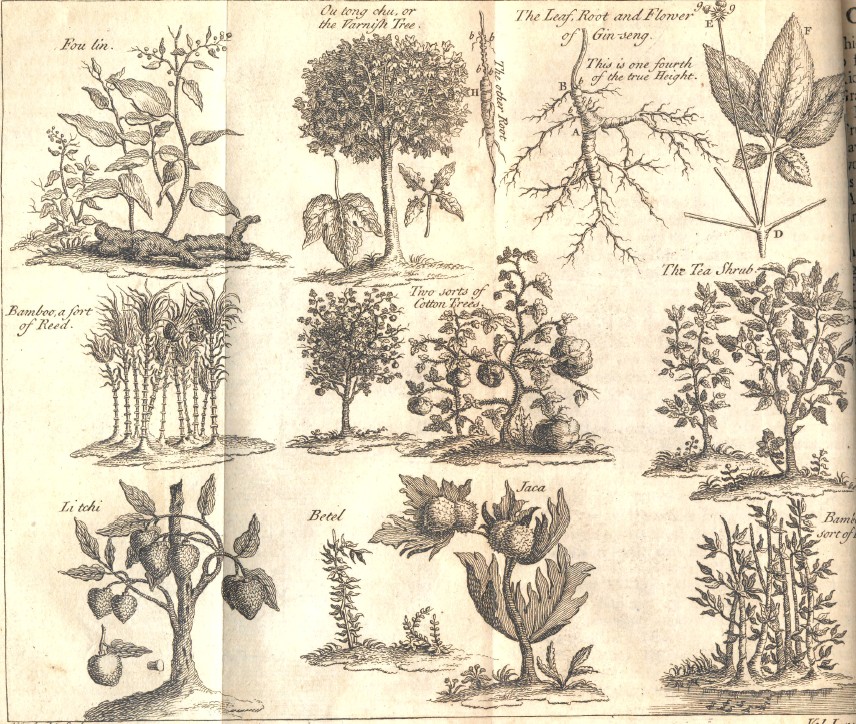
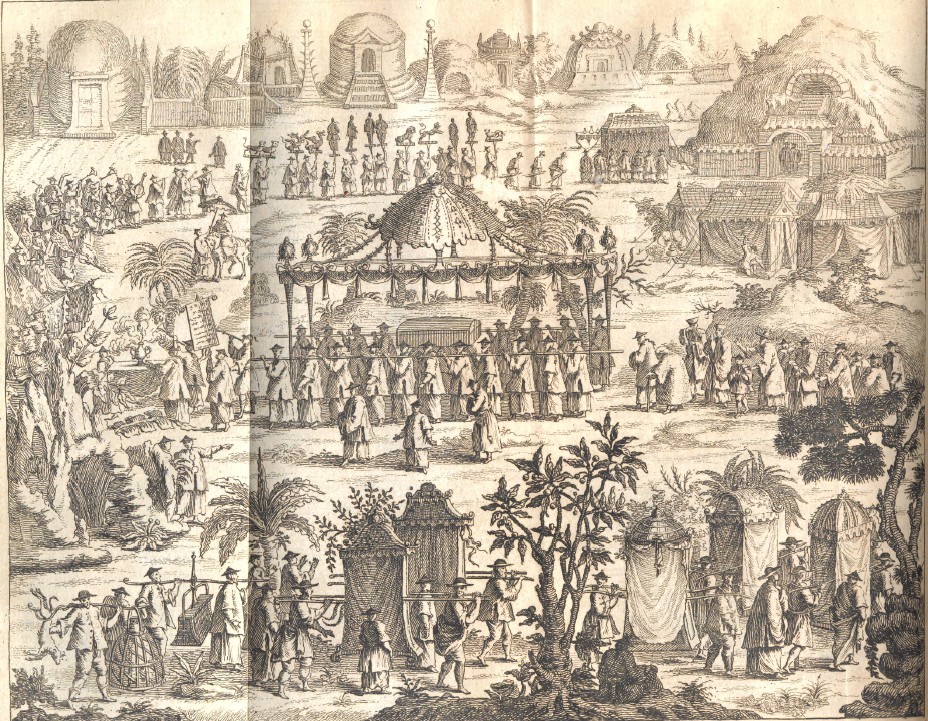
The book, described by the French philosopher Voltaire as “the most complete and best description of China in the world”, covers a wide variety of topics including customs, crafts, language music, natural sciences, politics and religion in China. The book had a significant impact on the growth of interest in Chinese culture in 18th century Europe. It is also a notable work in cartography containing the first European map of Korea by Jean-Baptiste Régis and maps of China by Jean Baptiste Bourguignon d’Anville.
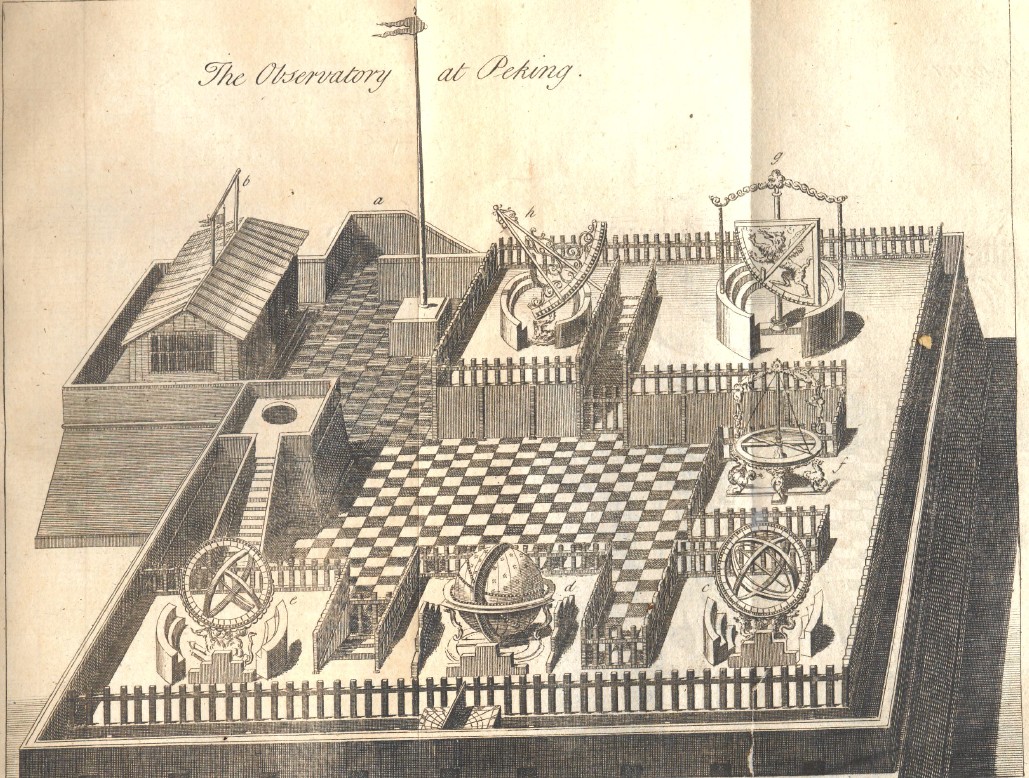
The image below described in the book as “The Observatory at Peking” is now known as The Beijing Ancient Observatory. Originally built in 1442, it was reorganised and new equipment added by the Jesuits in 1664 and rebuilt in 1673. It is a pretelescopic observatory and one of the oldest in the world. Astronomy was a major interest for Jesuits who believed that the developing science fitted with their desire to “find God in all things”. Giovanni Battista Riccioli, who mapped the moon in 1651, and Christopher Clavius, who helped develop the Gregorian calendar we use today, were both Jesuits. Chinese astronomy was also highly developed at this time in comparison to Western practice. The Dunhuang Star Chart, dating back to the Tang Dynasty, around 700 CE, is recognized as the oldest known complete manuscript star atlas from any civilization.
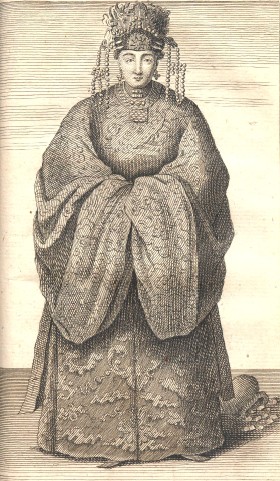
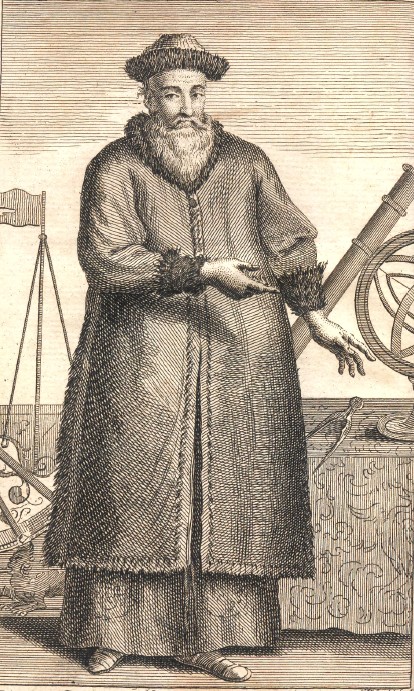
Several notable people from the 17th century are described in the text and depicted in images in the book. The images below are of Candida Xu and Ferdinand Verbiest. Candida Xu was born in 1607 and was a Chinese Catholic who was born into a prestigious family. She was the granddaughter of Xu Guangqi who had converted to Catholicism in 1603 and worked with the Jesuit Order to translate classic Western texts into Chinese. Candida worked to spread Christianity in China and used her wealth to fund the building of churches and support the publication of religious texts in Chinese.
Ferdinand Verbiest was a Flemish Jesuit missionary born in 1623. He was given the responsibility of building the new observatory at Shanghai, mentioned above, by the Kangxi Emperor. A close friend of the emperor and a consistent presence at his court, Verbiest worked as a cartographer, diplomat and translator as well as modifying the Chinese calendar. He was also interested in the power of steam, designing for the emperor a steam powered trolley regarded by some as the world’s first steam powered vehicle. The proposed vehicle couldn’t carry people or goods and there is doubt that it was ever built.
References
The general history of China. Containing a geographical, historical, chronological, political and physical description of the Empire of China, Chinese-Tartary, Corea and Thibet. Including an Exact and particular account of their customs, manners, ceremonies, religion, arts and sciences. The whole adorn’d with curious maps, and a variety of copper plates. Done from the French of P. Du Halde – SPT/RB/8vo/190


Leave a comment