Guest blog by Peter M Hills DipEE MSc CEng MIET
The Sperry 1412 computer’s design was first postulated at Sperry Gyroscope’s Bracknell R & D department in 1967. The prototype appeared in 1968. Given that computer systems of the time were nearly the size of small houses, its applications were initially thought to be in the aerospace industry where a fast, general-purpose digital computer of shoebox dimensions and low weight would appeal to system designers. In fact, most applications were for the British and French Navies.
Those applications were the Exocet MM38 missile pre-launch fire control system, operational in 1974 and its later upgrade MM40 operational in 1986, the Sea Archer GSA.7 gunfire control system for the Royal Navy, operational in 1983 and project Chevaline – a secret British upgrade to American Polaris nuclear missiles. Chevaline was a manoeuvring exo-atmospheric vehicle that sat on top of the Polaris A3T missile. It carried one nuclear warhead and an array of decoys. It came into service in 1982 on HMS Renown.
It is now more than 50 years since the Sperry 1412 computer first entered service with the French Navy. In 2023, MBDA confirmed to me that there were several French Navy Exocet MM40 systems still using the 1412A computer – an in-service life of 47 years and counting.
This is the story of a remarkable computer, the projects it was applied to and the people that made it happen.
The Sperry 1412 memory system
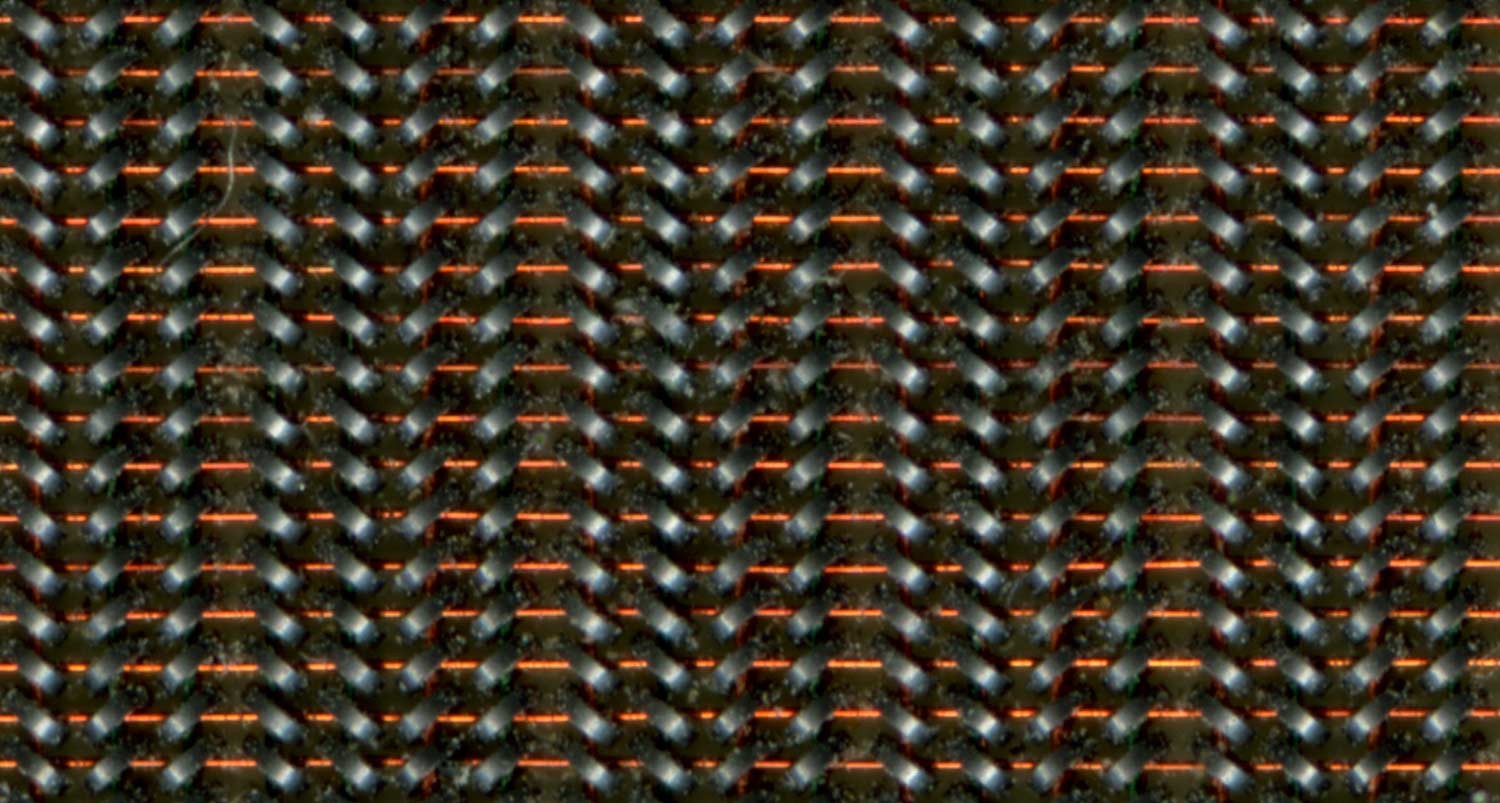
Each 4mm diameter ferrite core is one bit. Each would be threaded by up to four wires dependent upon the required RAM/ROM configuration
© Copyright Ampex
The Mark One production Sperry 1412 used ferrite core memory, developed by IBM during the 1950s. Ferrite core memory made possible the concept of a general-purpose stored program computer, leading in 1964 to the introduction of the IBM System 360 mainframe. This used the IBM 2361 storage unit with a memory capacity of 524,000 36-bit words and a cycle time of eight microseconds – fast for the time.
The Sperry 1412 ferrite core memory had 4096 12-bit words fabricated by Ampex, an American electronics company founded in 1944, who specialised in magnetic tape-recording technology at the time. They had their UK office in nearby Reading.
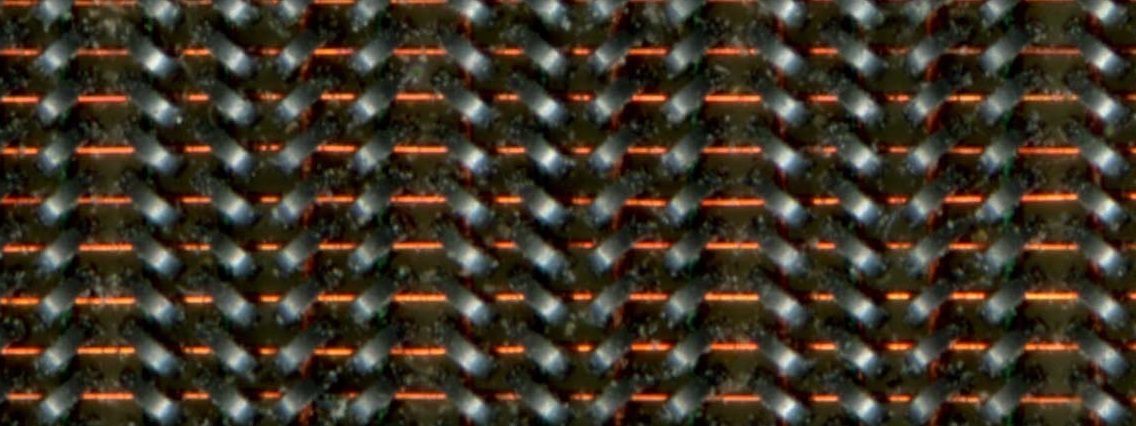
Each ferrite core, representing one bit, was threaded with up to four wires – Read, Write, Sense and Inhibit. If a bit was to be set permanently to a one or a zero, the appropriate wire would bypass the core.
The ferrite core memory stack for the Exocet MM38 project was 7 cm wide, 9 cm high and 9 cm in length. The stack contained six double-sided ferrite core planes.
It still seems extraordinary to me that partitioning a 4096-word memory into 128 words of RAM, leaving the rest as ROM – with each bit of the latter set according to the program instruction at that memory address – was at all possible. Ampex would have taken the program listing and produced a wiring diagram for each ferrite core plane, leaving specialist Philippino weavers to thread the wires. A single mistake by them would invalidate an entire plane. I really do mean Philippino, because Ampex subcontracted the work to a subsidiary on those islands apparently because of availability of tiny female fingers.
The Sperry 1412A computer used for the Exocet MM40 project and the Naval gunfire control project GSA.7 had 8192 12-bit words of semiconductor memory.
© Copyright Imperial War Museum
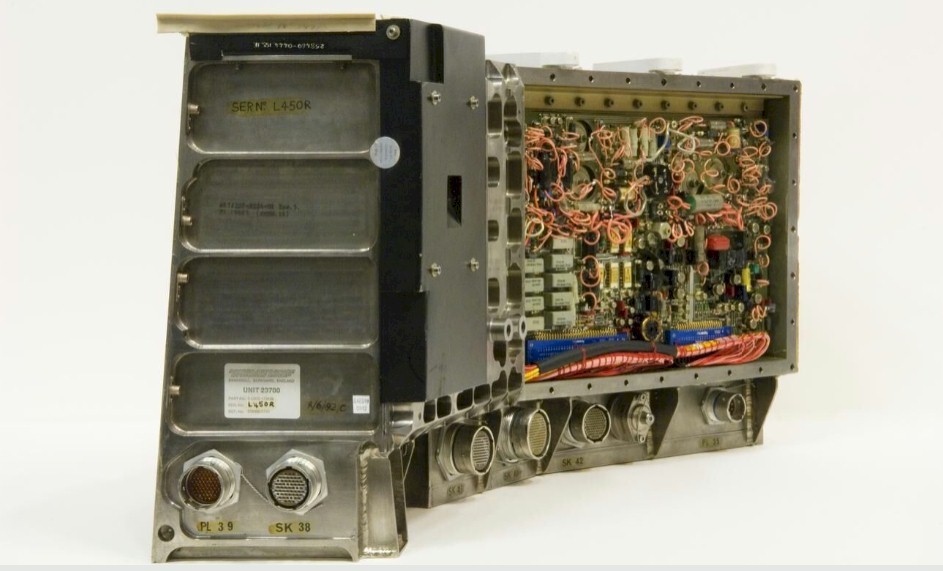
The Sperry 1412 computer for project Chevaline reverted to using ferrite core memory. Ferrite cores retain their data when power is removed and provide immunity from electromagnetic pulse (EMP) and other forms of ionising radiation.
The ‘dog-leg’ configuration, evident above, was an expensive re-design necessary to fit the cylindrical nature of the Chevaline vehicle. The front section is the power supply, followed by the ferrite core memory, followed by the computer unit.
Chevaline was decommissioned in 1996. It was replaced by the Trident D5 system. Chevaline vehicles, once safely voided of their payload, noxious gases and batteries were eventually distributed to a number of museums around the country.
Ferrite core memory was used throughout project Apollo and all pre-1990 Space Shuttle flights, in spite of the availability of semiconductor memory. When the flight computers in the Challenger Shuttle were recovered from the Atlantic in 1986, their ferrite core programs and data were intact.
Software for most of these projects was largely written in machine code – an exceptionally tedious process. Software development tools were non-existent at the beginning. However, that did mean compact optimal code could be produced – witness the fact that each of these projects were squeezed into a memory of either 4096 or 8192 12-bit words.
An assembler, editor, emulator and multi-user workstations based on Sperry Rand drum storage came later.
Further reading
The extracts above are from ‘History of the Sperry 1412 Computer and its Applications’ by Peter M Hills which has been deposited at the IET Archives.
A brief history of the Sperry Gyroscope Company can be found at the following link: https://rochesteravionicarchives.co.uk/categories/sperry-gyroscope
Other blogs by Peter M Hills:


Leave a comment