Graeme Gooday, University of Leeds
Her many friends, scattered in various places on their summer holiday, were shocked to read in their newspapers, one morning, that she had passed away on August 26, 1923, at the age of sixty-nine, leaving uncompleted much that she meant to do, but having accomplished very much more than most of us are content even to begin.’
Evelyn Sharp, Hertha Ayrton: A Memoir, 1926. p.299.[i]
On Sunday August 26 1923, there was sad and shocking news from a village in Sussex: the celebrated Hertha Ayrton was no more.[ii] Two days after her death, Britain’s pre-eminent newspaper, the Times, recognised her in unprecedented terms as ‘a distinguished woman scientist’. To substantiate this the editorial noted that Mrs Ayrton (as she was conventionally known) had been the first woman to be elected a member of the UK’s Institution of Electrical Engineers and the first to be awarded alone the Royal Society’s prestigious Hughes medal for her innovative research on sand ripples and electric arc lights.
Equally importantly, The Times recorded that in 1915 she had ‘invented and offered to the War office a hand fan or flapping device for dissipating and countering poison gas attacks’, noting also that due to bureaucratic obstruction this was not deployed until a year later; the clear implication was that Army indifference to her life-saving technology culpably increased deaths among trench combatants in the Great War, 1914-18.[iii] Sadly, in August 1923 no comparable remedy was available to prevent Hertha dying of blood poisoning, the infection likely deriving from an insect bite two weeks earlier. Such was the accidental fate of a brilliant woman who achieved the highest recognitions for her original research and inventions.
On the same day, Tuesday 28th August, a more detailed but equally sympathetic obituary appeared in the Manchester Guardian. Although titled simply ‘Mrs Ayrton’, this well-informed obituarist also characterised her as a ‘scientist of great distinction’. Unlike most other newspaper accounts, this summary highlighted her name as ’bound up in the public mind’ with research on electric arc lighting. Moreover, it explained fastidiously how this became Hertha’s research specialism, working entirely independently of her spouse, William, during his lifetime, and after his death working in a top floor laboratory at her London home.
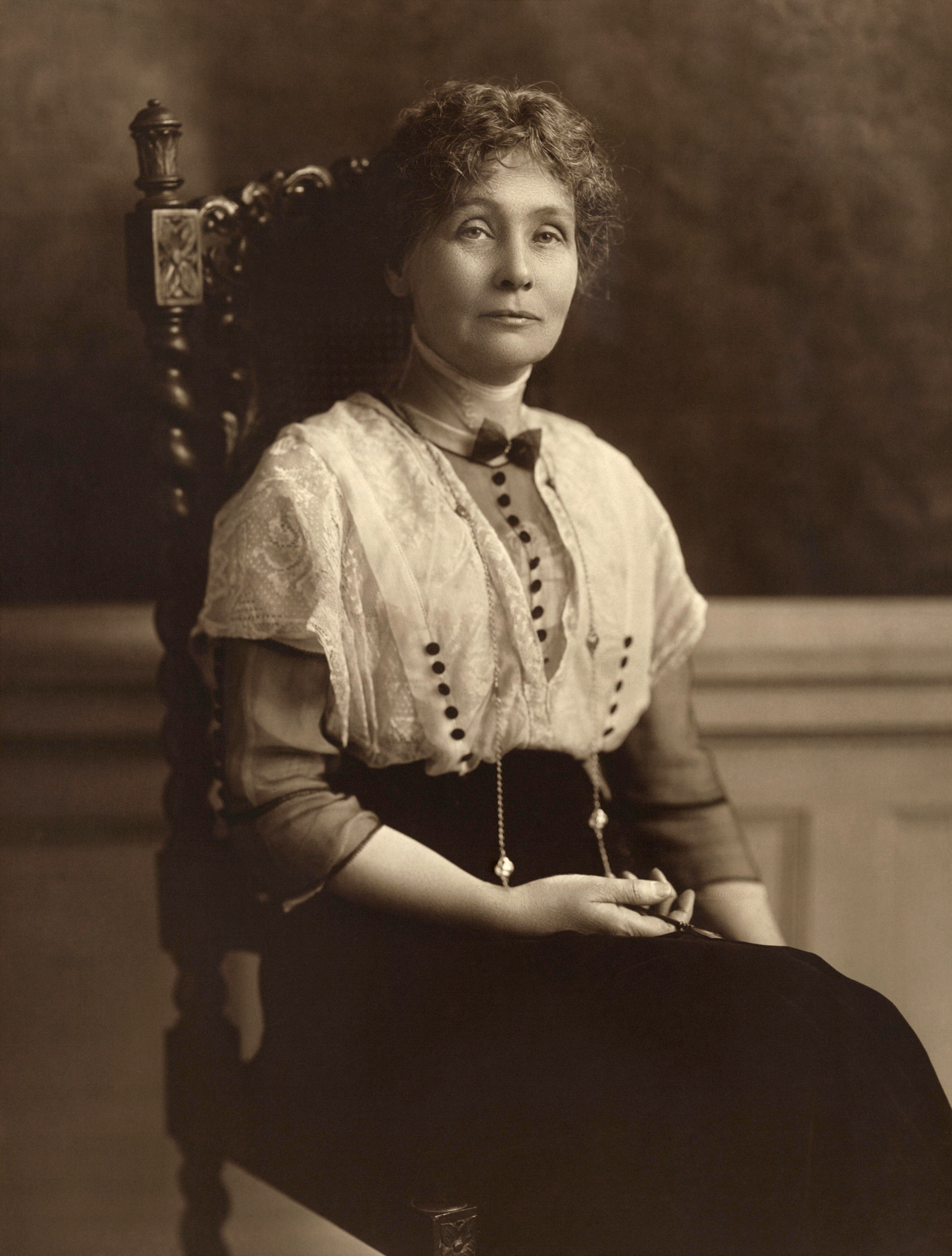
As well as an unusually precise account of her education at the University of Cambridge, this piece closed with an observation made by no other contemporary newspaper: Hertha’s house had latterly been ‘a home for suffragist endeavour’, notably where Emmeline Pankhurst was ‘nursed back to health’ after release from Holloway Prison in 1913. This distinctive political reference in the Manchester Guardian surely reflected not only that pre-war Manchester had been a major centre of campaigning for women’s suffrage, but also home to the Pankhurst family that had led so much suffrage campaigning.[iv]
Hertha’s nationwide reputation as a scientist of ‘great distinction’ is clear from the reporting of her death on 28th August across a range of other local British newspapers too. In the southwest her posthumous identity was mostly reported as a scientific researcher: ‘A Distinguished Woman Scientist’, was the headline used by the Gloucester Citizen to report the sad news,[vi] while the Exeter and Plymouth Gazette reported her passing as ‘Woman Scientist’s Death: A notable career’, [vii] and ‘Mrs Hertha Ayrton: Death of a Notable Woman Scientist’, by the Western Daily Press.[viii]
Looking further north, the focus shifted to Hertha’s invention of the life-saving gas-repelling flapper fan. The Aberdeen Journal, reported her as the ‘Well-known scientist and inventor’,[ix]while the Dundee Courier was more specific: ‘Woman Inventor: Designer of the “Ayrton Flapper” Dead’.[x] And later in a short mention by the Tamworth Herald, ‘Mrs Ayrton, inventor of the Ayrton flapper, which saved so many lives during the war, has herself now passed on.[xi]
The mainstream newspaper reporting of Hertha Ayrton’s death indicates that, in the 1920s landscape of increased women’s voting rights and professional employment opportunities, both men and women acknowledged how remarkable her life and career had been. Consider a comment in the December issue Woman Engineer from Andrew Stewart, who like Hertha, was a Member of the Institution of Electrical Engineers. In his capacity as Director of the Consolidated Pneumatic Tool Company he recognised that the late ‘Mrs Hertha Ayrton’ ‘was … the first member of the fair, but no longer frail sex, to distinguish herself in the engineering world’. Noting the challenges involved, however, he added that it had taken women’s wide-ranging service in the Great War (1914-18) for abilities such as Hertha’s to achieve proper recognition.[xii]
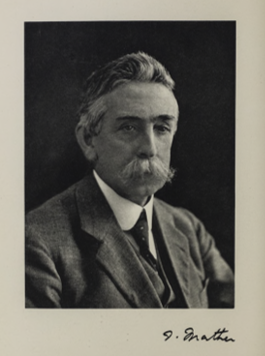
Tellingly, it was two men somewhat closer to Hertha who were most forthright in condemning the notoriously uncivil obituary of her that misogynist chemist Henry Armstrong had published in Nature on 1st December, and analysed in a previous blogpost.[xiii] The Ayrton family doctor, H.H. Mills wrote in two days later to deny Armstrong’s claim that Hertha had neglected her late husband, William, during his final years of ill-health, or that they had been any kind of ‘ill-assorted’ couple. To this Armstrong replied condescendingly that Dr Hill ‘must be strangely lacking in sense of humour’. [xiv] Even more robust in challenging Armstrong’s failure to uphold the respectful etiquette of obituaries, was Professor Thomas Mather, who had worked alongside both Hertha and William in the electrical engineering laboratory at the City & Guilds College in South Kensington. With icy indignation at Armstrong’s slanders, Mather wrote:
From reading Prof. Armstrong’s article one would gather that Mrs Ayrton had little originality, and that all the scientific work she did was down to her husband’s lead. Neither inference would be true … The late Prof. Ayrton told me on several occasions that when Mrs. Ayrton took up the study of the electric arc he left the subject entirely alone so that there should be no excuse for anyone giving him the credit for her work…
With Mather’s closing broadside on Armstrong’s disingenuousness, the Nature debate closed.[xv]
An important gender-specific point to end this reflection on Hertha’s life and career is that she had been an especially great inspiration to the still small proportion of women working in science and technology. As the quarterly Woman Engineer reported in December as the magazine of the Women’s Engineering Society (W.E.S.), both founded 1919: ‘In the passing away of Mrs Ayrton we have lost one of the foremost pioneer women in the scientific and engineering world’. Never before had a British woman been such a high profile figure in technoscience, her work ranging across, physics, electrical engineering, and mechanical inventions. The extra significance was clear in the Woman Engineer’s brief obituary. Writing as both editor of that magazine and W.E.S. Secretary, Caroline Haslett added: ‘Mrs Ayrton took a great interest in the work of the W.E.S.’ and hoped for ‘much progress and development’ from ‘the young movement with so much enthusiasm.’ [xvii]Inspired by Hertha Ayrton, as well as the U.S. industrial psychologist, Dr Lillian Gilbreth, it was Ms Haslett herself who arguably went on to succeed Mrs Ayrton as the leading technoscientific woman of interwar Britain.[xviii]
There are surely many more tributes to Hertha Ayrton’s life from late 1923 that there is not space to cover here. Fortunately there are many digitised online newspapers available for this period that will reward further research. For example we know from the Jewish Chronicle obituary of 7 September 1923 that although Hertha was a life-long secular agnostic she ‘never lost an opportunity of expressing pride in her Jewish descent’ and always made a point of returning to her maternal home for Passover.[xix] It is also pertinent that so great was her fame across the British empire that Mrs Ayrton’s passing was very soon reported in The Times of Malaya noting her early work on inventing line-dividers, and later work on the electric arc.[xx]
We can conclude this brief discussion of how the world received news of Hertha Ayrton’s death, with these words that close the memoir by her friend and fellow suffragist, Evelyn Sharp:
All over the civilized world, obituary notices, most of them full of admiration and praise, and only one, I believe, really unjustly critical, appeared in newspapers and scientific journals ; and interested strangers dwelt on her career, as such onlookers do, for a passing hour. But her lasting monument will not be found in the appreciation of intelligent strangers, or even in the affectionate memory of those who knew and loved her, but rather where she would have wished it to be found in the laboratories where science is brought to the aid of humanity, where others will develop the discoveries that she made, and carry on the investigations that she began perhaps without knowing to whom they owe that beginning.[xxi]
In the third and final blogpost in this series, in November this year, we will return to Hertha Ayrton’s award of the Royal Society’s Hughes Medal on November 30 1906. That was the most transformative moment of her career, one that had a galvanizing effect on the women’s movement both in technoscience and in the broader campaign to achieve votes for women.
[i] Evelyn Sharp, Hertha Ayrton: A Memoir, 1926. p.299.
[ii] Elizabeth Bruton, ‘The life and material culture of Hertha Marks Ayrton (1854-1923)’, Science Museum Journal, Autumn 2018 https://journal.sciencemuseum.ac.uk/article/hertha-marks-ayrton/#abstract
[iii] ‘Mrs. Hertha Ayrton: A Distinguished Woman Scientist’: The Times August 28, 1923, p.11.
[iv] ‘Mrs Ayrton’, The Manchester Guardian, August 28, 1923, p.8.
[v] https://en.wikipedia.org/wiki/Emmeline_Pankhurst#/media/File:Emmeline_Pankhurst,_seated_(1913).jpg
[vi] ‘A Distinguished Woman Scientist’, Gloucester Citizen, Aug. 28, 1923, p.6.
[vii] ‘Woman Scientist’s Death: A notable career.’ Exeter and Plymouth Gazette Aug. 28, 1923, p.8
[viii] ‘Mrs Hertha Ayrton: Death of a Notable Woman Scientist’, Western Daily Press Aug. 28, 1923,p.8.
[ix] ‘Obituary. Mrs Hertha Ayrton: Well-known scientist and inventor’, Aberdeen Journal, August. 28, 1923 p.6.
[x] ‘Woman Inventor: Designer of the “Ayrton Flapper” Dead’, Dundee Courier , Aug. 29, 1923, p.7.
[xi] ‘Obituary’, Tamworth Herald,Saturday, Dec. 29, 1923, p.3
[xii] Andrew Stewart, ‘On Making the Best of It’, The Woman Engineer vol. 1 No.17, December 1923, p.284.
[xiii] Graeme Gooday & Patricia Fara, ‘Sharpening the reputation of scientist and suffragist, Hertha Ayrton’ https://ietarchivesblog.org/2026/04/27/sharpening-the-reputation-of-scientist-and-suffragist-hertha-ayrton/
[xiv] H. Mills. ‘Mrs. Hertha Ayrton’. Nature 112, (1923). p.865.
[xv] Thomas Mather,. ‘Mrs. Hertha Ayrton’, Nature 112, (1923). p.939
[xvi] https://royalsocietypublishing.org/doi/pdf/10.1098/rsbm.1938.0022
[xvii] ‘Mrs. Hertha Ayrton, M.I.E.E.’, The Woman Engineer vol. 1 No.17, December 1923, p.280.
[xviii] Blogpost by Isabella Fletcher, ‘Caroline Haslett – Editor and a whole lot more!’
[xix] Jewish Chronicle, 7 September1923
[xx] ‘Woman Scientist Solves Final Problem’, The Times of Malaya and Commercial Advertiser of the Federated Malay States and Straits Settlement Aug. 29, 1923, p.9
[xxi] Sharp. Hertha Ayrton a Memoir p.300.
[xxii] https://en.wikipedia.org/wiki/Evelyn_Sharp_%28suffragist%29#/media/File:Evelyn_Sharp.jpg


.jpg)

Leave a Reply